We buy them · We test them · No sponsored rankings

The Best Gym Flooring for Home Gyms

3 sets reviewed · ranked by score · live prices

Gym flooring is the cheapest upgrade most home gyms skip: it protects the floor under your weights, cushions your joints, grips your equipment and, not least, keeps the noise down so the rest of the house tolerates your training. The choice comes down to two materials and a simple rule about where each belongs.

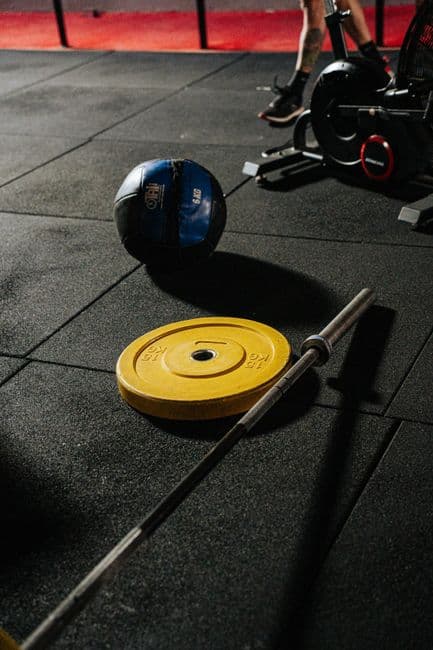
EVA foam interlocking tiles are light, cushioned, modular and cheap, which makes them the default floor for a general training area and body-weight work. Dense rubber matting is tougher and grippier, the right surface under heavy or vibrating equipment and in the spot where you set weights down. Foam dents and tears under heavy static loads and dropped iron; rubber does not. Most home gyms are best served by foam for the room and rubber for the lifting zone. We rank these on density, durability, noise dampening, grip, fit and value, using manufacturer specs and aggregated owner reviews, with no sponsored placements.

The short version: the Opti interlocking tiles are the cheap, modular default for a general floor, the Opti NBR equipment mat is the dense mat for under heavy kit and the lifting zone, and the Rolson tiles cover more garage floor per pack for the money.
Opti Large NBR Exercise Equipment Mat (200 x 120cm) review#28
6.6/ 10

Opti (Argos)

Opti Large NBR Exercise Equipment Mat (200 x 120cm)

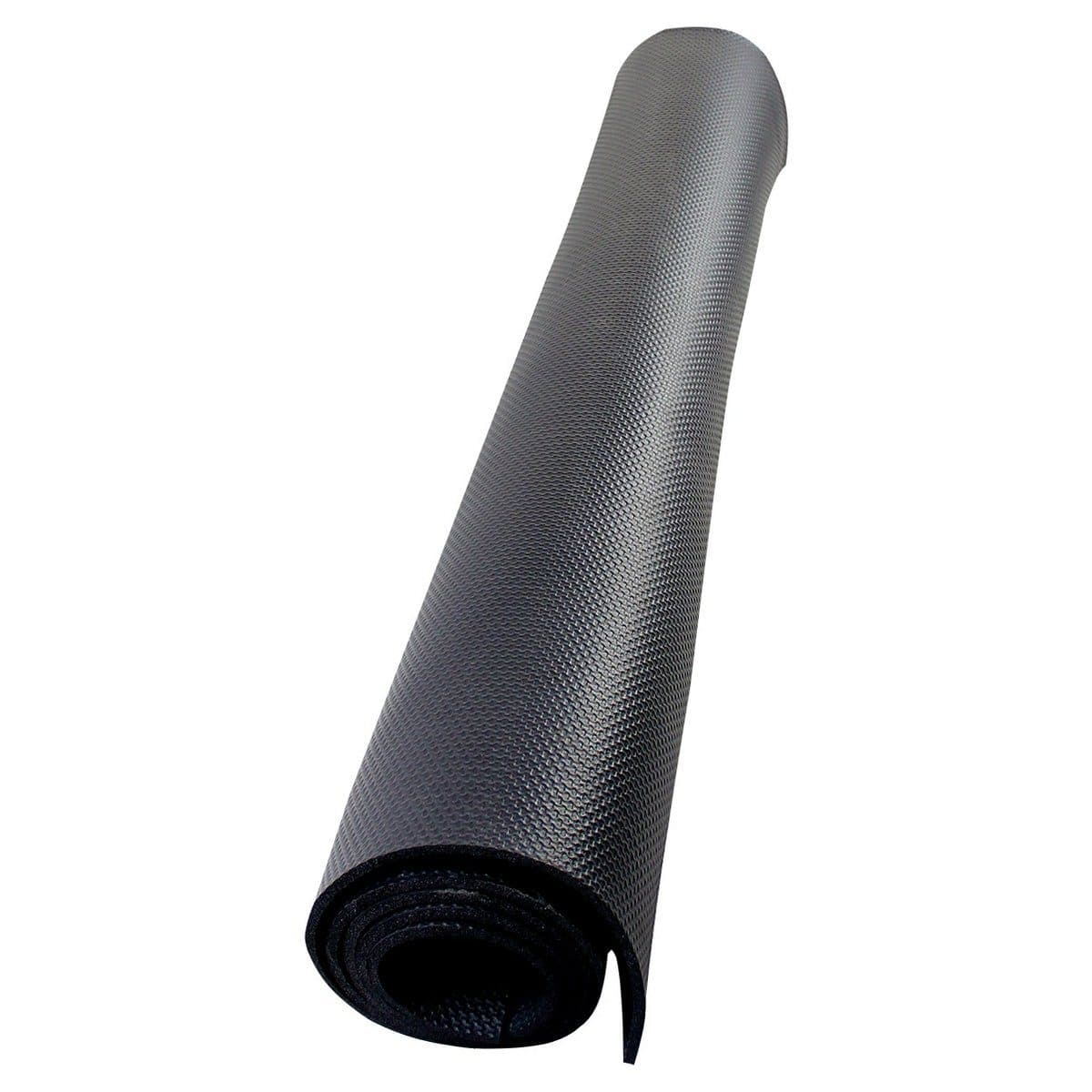
Where foam tiles cushion a room, this NBR rubber mat does the hard job: a single 200 by 120cm sheet to go under a treadmill, bike or rack, or to mark out the spot where you set weights down. It is dense, grippy and far tougher than foam, rolls away when not needed, and protects the floor from the loads foam would dent under. It is not a full-room floor, and it is not a competition drop pad, but for a lifting zone it earns its place.

Max
-
Steps
-
Price
~£35-45
Read review
Rolson 6 Piece Interlocking Floor Mats review#29
6.3/ 10

Rolson

Rolson 6 Piece Interlocking Floor Mats

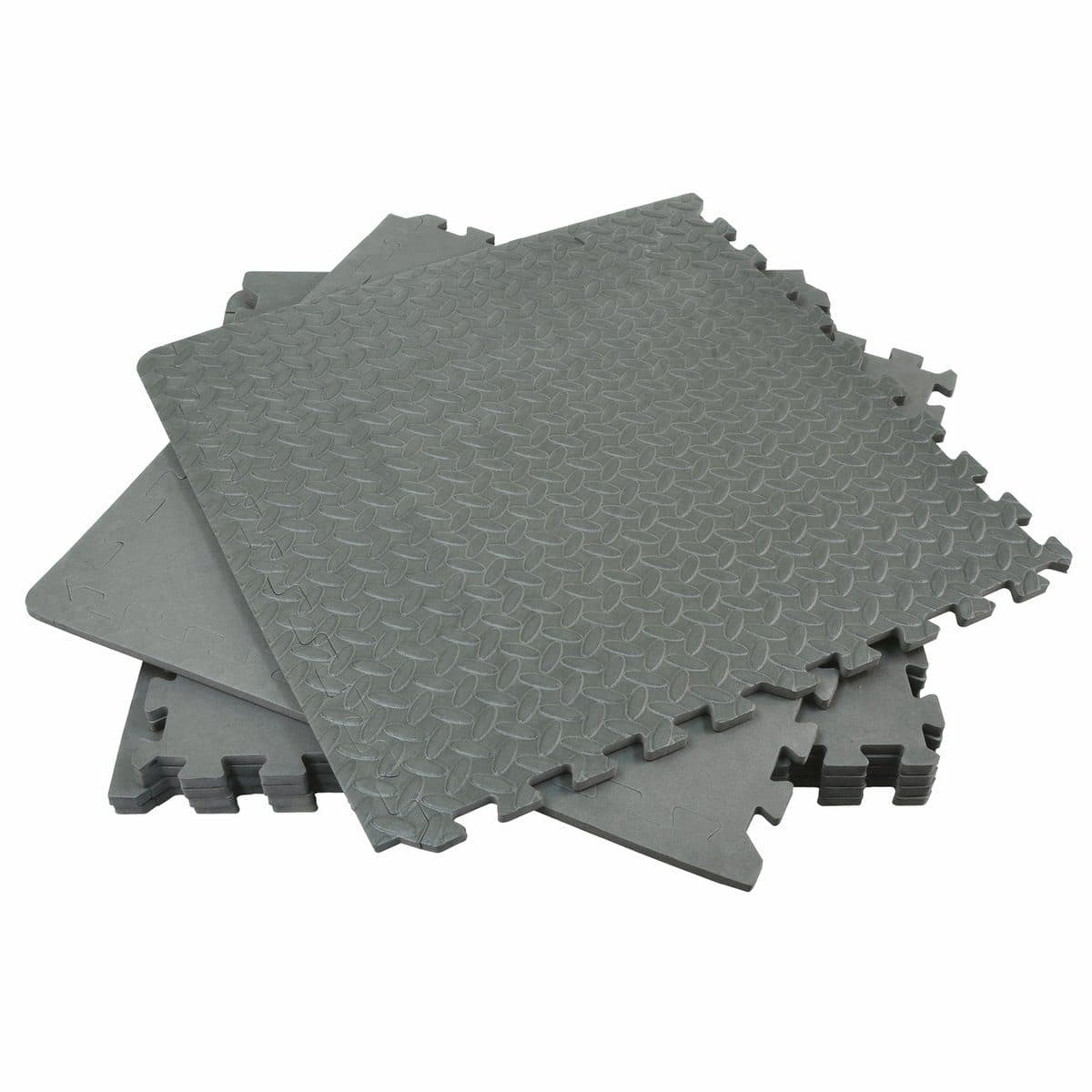
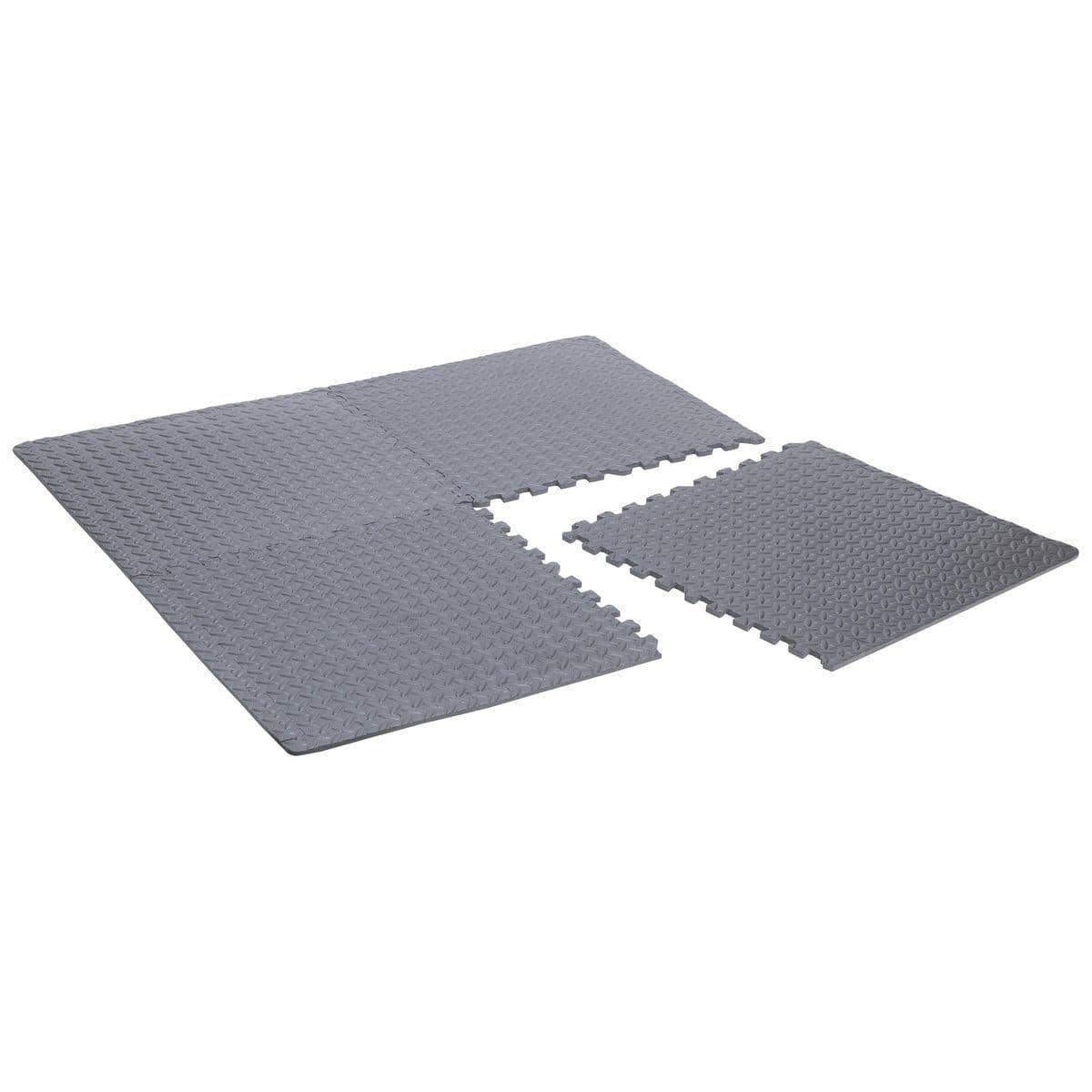
Rolson is a tools-and-garage brand, and these interlocking tiles are built for that world: six chunky 600mm EVA squares with a checker-plate top and edging strips, covering about 2.16m2 for roughly £20 to £25. That makes them a cheap way to floor a garage gym, with more coverage per pack than slimmer gym tiles. They share every foam limitation, so they are for the room, not for dropping iron.

Max
-
Steps
-
Price
~£20-25 per 6-tile pack
Read review

Frequently asked questions

Do I need foam or rubber gym flooring?

Both, usually. Foam interlocking tiles are cheaper, cushier and modular, so they floor a general training area well. Dense rubber is tougher and grippier, so it goes under heavy or vibrating equipment and in the lifting zone where you set weights down. Foam dents and tears under heavy loads and dropped iron; rubber handles them. Many home gyms use foam for the room and a rubber mat where the heavy work happens.

How thick should home gym flooring be?

For general training and body-weight work, 10 to 15mm of EVA foam is enough to cushion joints and protect the floor. Under cardio machines and in a lifting zone, density matters more than thickness, so a dense rubber mat beats thicker soft foam. For repeatedly dropping loaded barbells you need a dedicated rubber platform far thicker than any tile.

Will gym flooring protect laminate or vinyl floors?

Quality EVA foam tiles protect laminate and vinyl from scuffs and are generally safe on them, as long as you lay them on a clean floor and sweep underneath occasionally so trapped grit does not scratch. Keep dense rubber mats off vinyl specifically, as some rubber can stain it; rubber is best on concrete, tile or over a protective layer.

Can you drop weights on gym floor mats?

Not on foam. Soft EVA tiles cushion light contact but compress and tear under dropped loaded dumbbells or barbells, and the floor beneath still takes the shock. A dense rubber mat handles setting weights down and far more abuse, but even that is not a competition drop pad; for repeatedly dropping heavy loaded bars you want a thick dedicated rubber lifting platform.