 Rank #28
Opti (Argos)
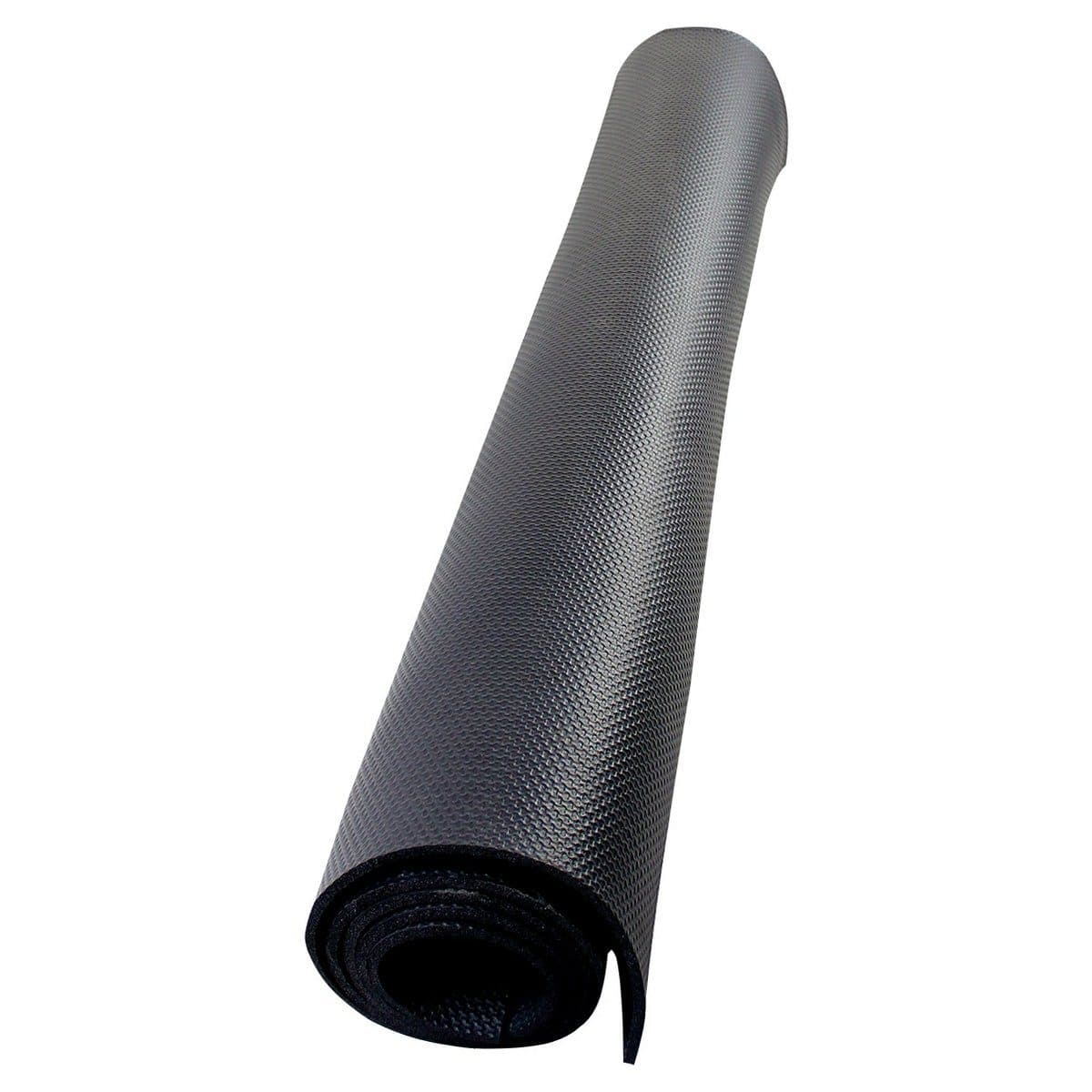
Opti Large NBR Equipment Mat Review
A dense rubber mat for the jobs foam cannot do: under heavy kit and the lifting zone.
Best bit
Dense rubber that shrugs off heavy equipment
Worst bit
One mat, so it covers a zone, not a whole room
Typical price
~£35-45
Sold direct by Argos. Price last checked during testing - confirm on the retailer's site.
At a glance
- Type
- NBR rubber mat (single sheet)
- Size
- 200 x 120cm
- Surface
- Textured, non-slip
- Use
- Treadmills, bikes, racks, lifting zone
- Storage
- Rolls up
- Colour
- Black
- Bought from
- Argos (Opti house brand)
- Price
- ~£35-45
Variants compared
| Use | Why this mat | Alternative |
|---|---|---|
| Under a treadmill or bike | Grips, deadens vibration, protects floor | Foam dents under the feet |
| Lifting zone | Dense surface to set weights down on | Foam tears, rubber tiles if dropping hard |
| Whole room floor | Not ideal, it is one sheet | Interlocking foam tiles cover more cheaply |
The Opti NBR mat in 60 seconds
Foam tiles floor a room; this does the heavy job. It is a single 200 by 120cm sheet of dense NBR rubber with a textured, non-slip surface, made to sit under a treadmill, bike or rack, or to mark the spot where you set weights down. The rubber grips, deadens vibration and noise, and shrugs off the heavy static loads that press dents into soft foam tiles.
Two caveats keep it honest. It is one mat, so it covers a zone rather than a whole room, and it is a training and equipment mat rather than a thick competition platform for repeatedly dropping loaded barbells. Within that, it is the tough surface a weights area actually needs, and it rolls away when you want the floor back.
What it is actually for
Two clear jobs. First, under cardio and heavy equipment: a treadmill or bike drums and creeps on a bare floor, and the dense rubber grips it in place, absorbs the vibration that travels through a house, and protects the floor from the feet and the sweat. Second, as a lifting zone: a defined, grippy, dense patch to stand on and set dumbbells down on, where soft foam would compress and tear.
At 200 by 120cm it is big enough to take a machine or give you a solid platform for dumbbell work, while still rolling up to store. If you want to floor a whole room, this is not the cheap way to do it; pair it with foam tiles for the surrounding area and keep the rubber where the load is.
Living with rubber: smell and curl
Two things owners consistently mention with rubber and NBR mats. The first is smell: new material often has a rubbery odour when unrolled, which fades over a few days to a couple of weeks if you air it in a ventilated space and wipe it down. It is the nature of the material, not a defect. The second is edge curl: rolled mats can lift at the edges at first, and laying them flat under equipment or weighting the corners for a day or two settles them.
Neither is a dealbreaker, but both are worth planning for: unroll it a few days before you need it, somewhere with airflow, and let the weight of your kit do the flattening. Keep it off vinyl flooring, which some rubber can mark.
Who is it for?
Great for
- Under a treadmill, bike or rack, to grip, quieten and protect
- A defined lifting zone for dumbbell training
- Anyone whose floor dents or drums under heavy or vibrating kit
- Home gyms that want a tough patch, not a whole foam floor
Not for
- Flooring a whole room cheaply (foam tiles cover more for less)
- Repeatedly dropping loaded barbells from height (needs a thick platform)
- Vinyl floors that rubber might mark
- Anyone wanting a cushioned surface for floor work (foam is softer)
Final Verdict
The Opti NBR mat is the dense, tough surface a weights area needs for the jobs foam cannot do: under heavy or vibrating equipment, and as a grippy lifting zone that protects the floor. It is not a whole-room floor and not a competition drop platform, but it is honest about being neither. Use it where the load is and foam tiles for the rest, air it out for the first few days, and it will quietly do its job for years. For most home gyms, this plus foam is the complete flooring answer.
Our ratings
- Density & Thickness7/10
- Durability8/10
- Noise & Impact Dampening7/10
- Grip & Traction8/10
- Ease of Fit & Cut6/10
- Value for Money7/10
Pros & cons
The good
- +Dense NBR rubber that handles heavy static loads without denting like foam
- +Big 200 x 120cm sheet covers a treadmill, bike or a full lifting spot
- +Textured non-slip surface keeps equipment and your feet planted
- +Deadens the vibration and drumming of cardio machines
- +Protects hard floors from heavy kit and set-down weights
- +Rolls up and stores away when you want the space back
The not-so-good
- –A single mat, so it is a zone cover, not a whole-room floor
- –New rubber can have a smell that needs airing for a few days
- –Can curl at the edges for a while after being unrolled
- –Not a competition drop pad for repeatedly dropping loaded barbells
- –Best kept off vinyl flooring, which some rubber can mark
Frequently asked questions
What is an NBR equipment mat for?
It is a dense rubber sheet to put under heavy or vibrating equipment, a treadmill, exercise bike or rack, or to mark out a lifting zone where you set weights down. The rubber grips, deadens noise and vibration, and protects the floor from loads that would dent soft foam tiles.
Can you drop weights on the Opti NBR mat?
You can set weights down on it and it handles far more than foam, but it is an equipment and training mat, not a thick competition drop pad. For repeatedly dropping loaded barbells from height you want a much thicker dedicated rubber platform; for normal dumbbell training and setting weights down with control, this is fine.
NBR rubber mat or foam interlocking tiles?
Different jobs. The rubber mat is denser and tougher, so it goes under heavy equipment and in the lifting zone; the foam tiles are cheaper, cushier and modular, so they floor the rest of the room. Many home gyms use both: foam for the area, rubber where the heavy work happens.
Does the Opti NBR mat smell?
New rubber and NBR foam commonly have a smell when first unrolled, which owners report fades over a few days to a couple of weeks with airing. Unroll it somewhere ventilated before use, and wipe it down. It is normal for the material rather than a fault.
Will the mat curl at the edges?
Rolled mats can curl at the edges for a while after unrolling. Laying it out flat under the weight of equipment, or weighting the corners for a day or two, settles it. Storing it rolled the opposite way briefly can also help flatten a stubborn curl.
More dumbbell reviews
 #27
Opti (Argos)
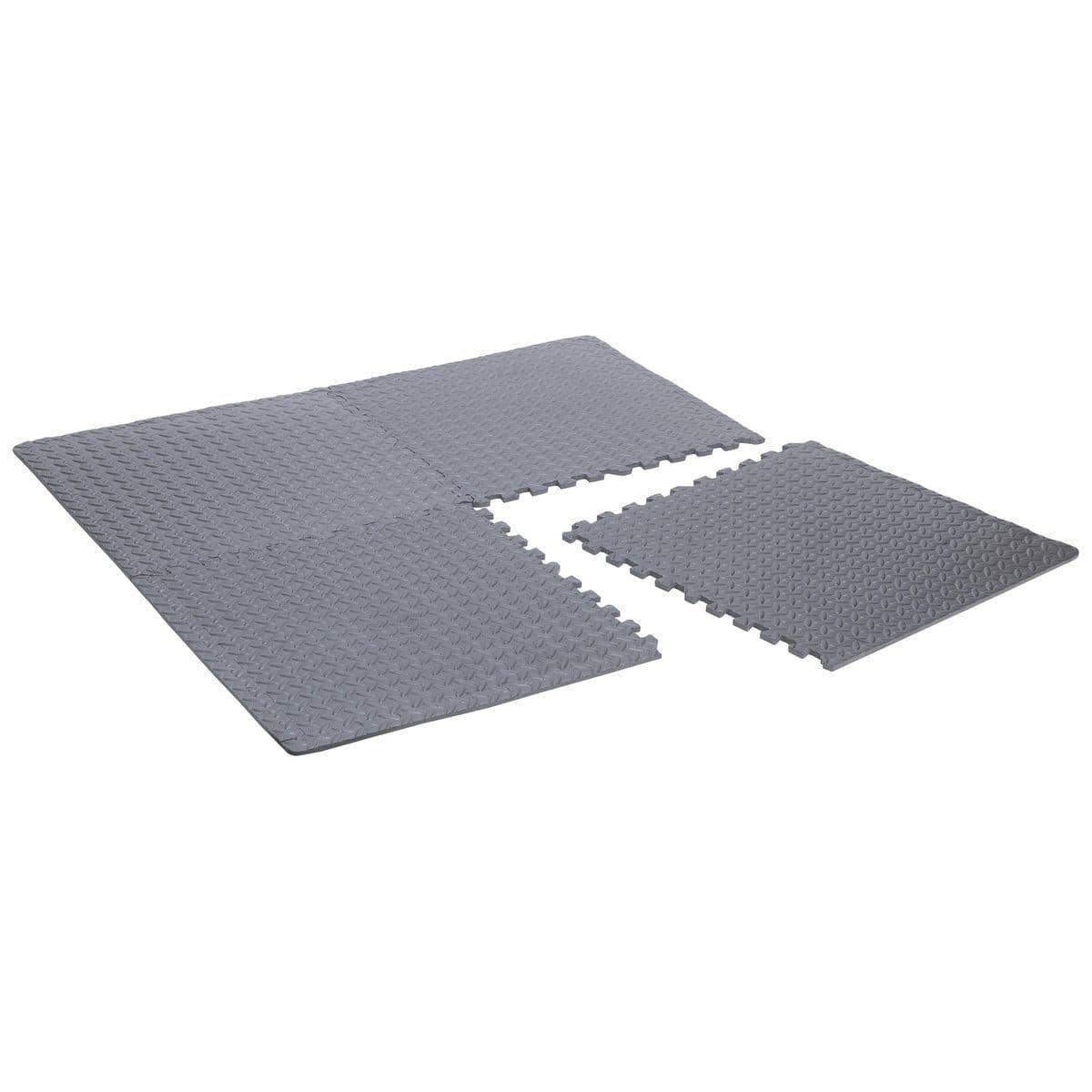
Opti Interlocking Floor Mat Set of 4
EVA interlocking tiles are how most home gyms get a floor, and the Opti set is the easy budget way in: 10mm grey foam tiles that snap together, cover about 1.5m2 for roughly £20, and cushion, quiet and protect the floor beneath. They dent under heavy static loads and are not made for dropping iron, but for a general training area they do the job for very little.
- Max
- -
- Steps
- -
- Price
- ~£18-20 per 4-tile pack
 #29
Rolson
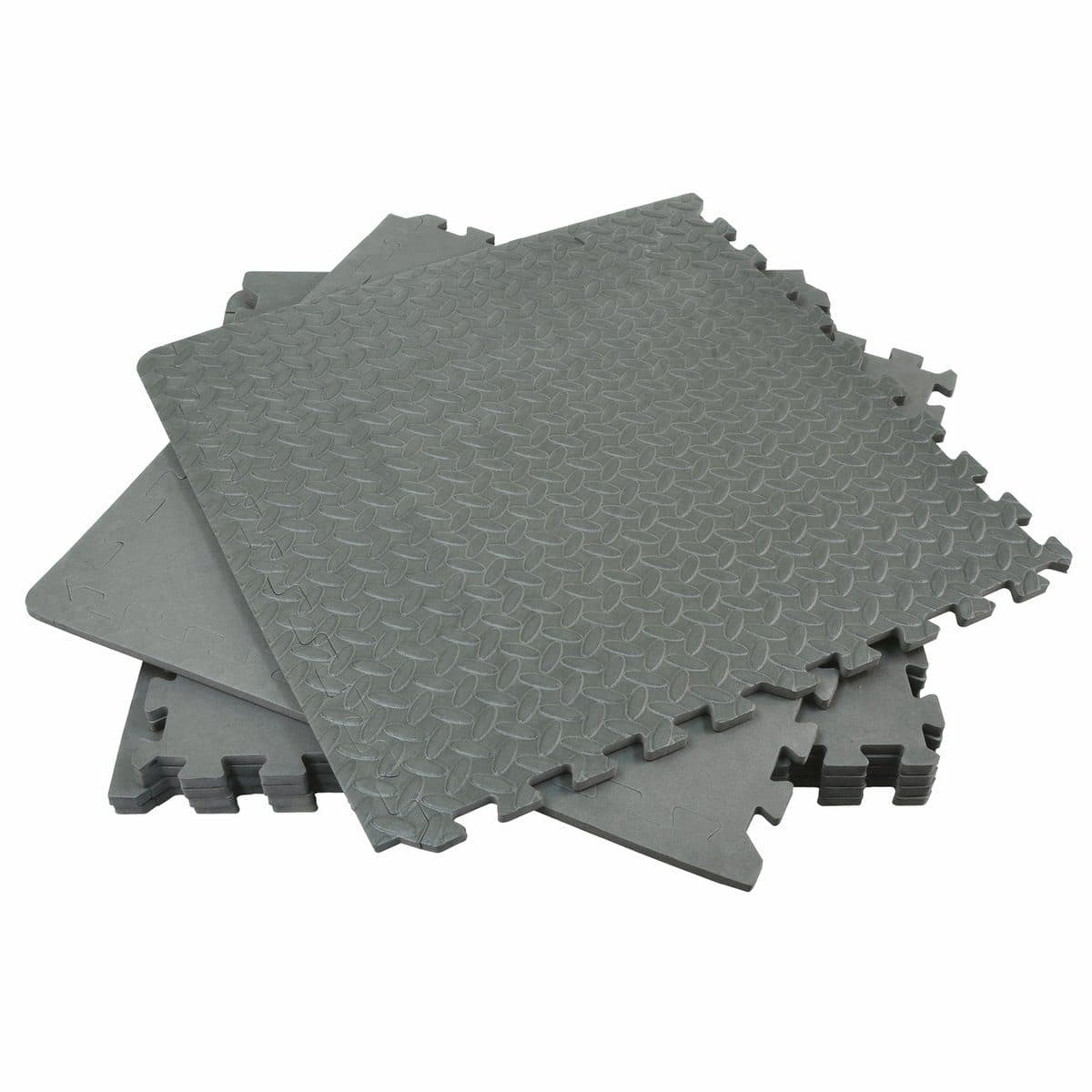
Rolson 6 Piece Interlocking Floor Mats
Rolson is a tools-and-garage brand, and these interlocking tiles are built for that world: six chunky 600mm EVA squares with a checker-plate top and edging strips, covering about 2.16m2 for roughly £20 to £25. That makes them a cheap way to floor a garage gym, with more coverage per pack than slimmer gym tiles. They share every foam limitation, so they are for the room, not for dropping iron.
- Max
- -
- Steps
- -
- Price
- ~£20-25 per 6-tile pack