Free tool · Takes 20 seconds
What Weight Dumbbells Do I Need?
The most common question we get, answered properly. Tell us who you are and what you're training for, and we'll give you honest starting weights, the set size worth buying, and which of our tested sets actually fits.
Your recommendation
Start compounds at
8-14kg
Presses, rows, lunges - per dumbbell
Start isolation at
4-8kg
Curls, raises, extensions - per dumbbell
Buy a set up to
~32kg
Headroom for 2-3 years of progress
Weights are per dumbbell and deliberately conservative - good form at a lighter weight beats grinding reps. The set maximum matters more than today's numbers: you'll likely add weight to pressing movements every few weeks at first, so buy for the lifter you'll be in two years.
Tested sets that fit
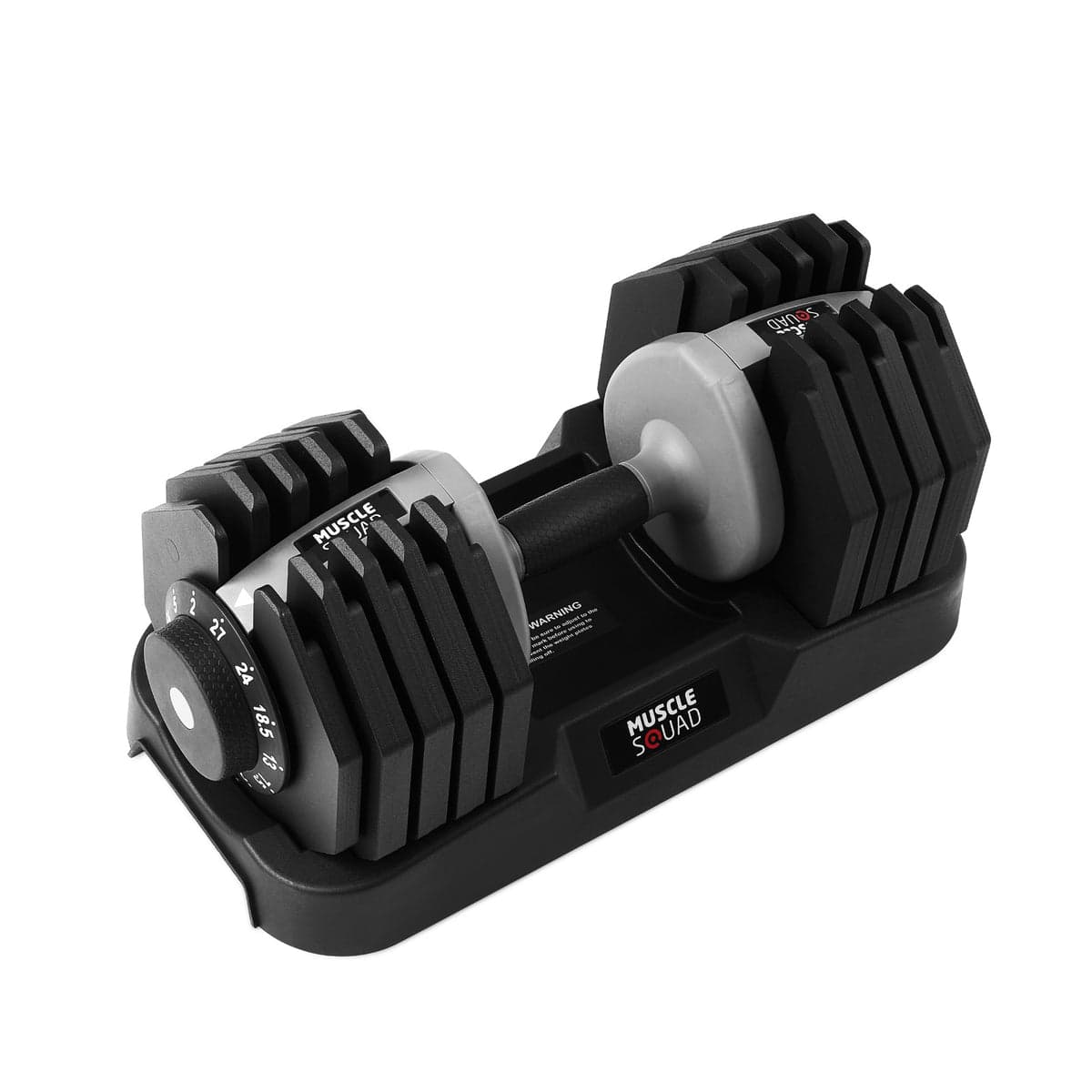 Our pickMuscleSquad 32.5kgThe best value route in - four models from £65.Max 32.5kg · 2.5kg steps · typically £210 a pair
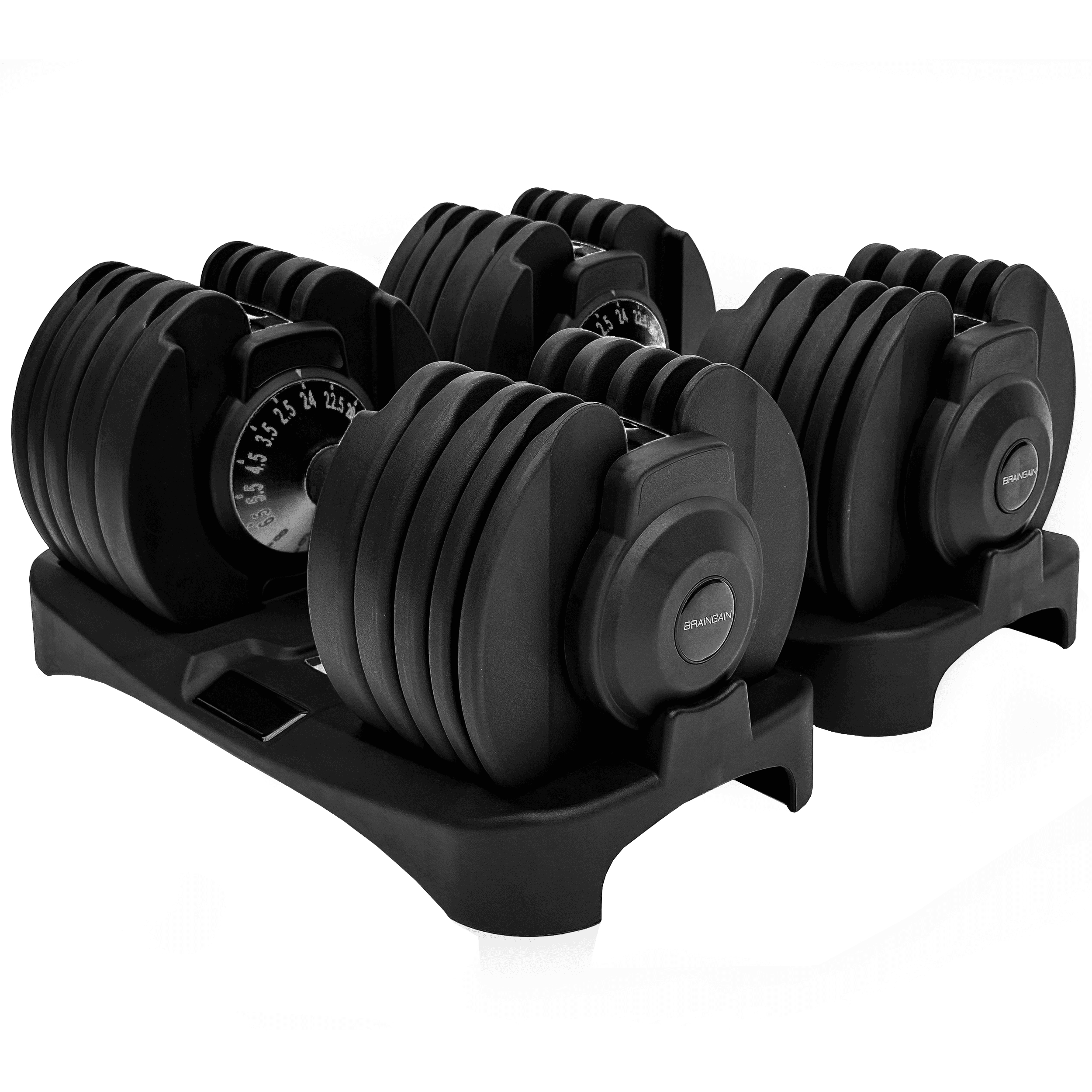 BrainGain 32kg OctagonBudget-friendly heavy sets with sensible increments.Max 32kg · 2.5kg steps · typically £300 a pair
Prices are typical pair prices at the time of our last review update - each review shows live Amazon pricing where available.
How we got these numbers
The starting weights come from coaching convention, not a formula dressed up as science: a weight you can control for 8 to 12 clean reps with 2 or 3 reps left in the tank. Compound movements (presses, rows, goblet squats, lunges) use several muscle groups, so they start heavier. Isolation movements (curls, lateral raises, extensions) start much lighter than most people expect - a strict 8kg lateral raise is harder than it sounds.
The "buy up to" figure is the one people get wrong. It assumes you'll progress - because you will. A beginner adding 2.5kg to their dumbbell press every few weeks outgrows a 12.5kg set within months. Buying for the lifter you'll be in two to three years is cheaper than buying twice, which is also why adjustable dumbbells are our default recommendation: one pair covers the whole journey.
Every set the calculator recommends is one we bought and tested - see how we rank them.
Common questions
What weight dumbbells should a beginner buy in the UK?
Most men new to training start compound lifts (presses, rows) with 8-14kg per dumbbell and isolation work (curls, raises) with 4-8kg. Most women start compounds with 5-10kg and isolation with 2-5kg. The key is to buy a set with headroom: beginners progress quickly, and a fixed 10kg pair can be outgrown within months.
Are 10kg dumbbells enough to build muscle?
For a few months, yes - especially for isolation exercises and higher-rep training. But progressive overload means the weight that challenges you today will not in six months. For long-term muscle building most lifters want access to at least 24-32kg per dumbbell for presses and rows, which is why adjustable sets are the standard home gym recommendation.
Should I buy one pair of dumbbells or a full set?
Neither, for most people. A single fixed pair gets outgrown and a full fixed set costs over £500 and needs a rack. One adjustable pair covering roughly 2-32kg replaces both, which is why every set we review and rank is adjustable.
How quickly will I outgrow my dumbbells?
Faster than you expect. Beginners typically add 2.5kg to pressing movements every few weeks in their first six months. If you buy a set whose maximum matches what you can lift today, you are buying its replacement within a year. Buy the maximum you expect to lift in two to three years, not today.
Do increment sizes really matter?
Yes, more than max weight for many lifters. Jumping from 10kg to 12.5kg is a 25% increase - often too much on isolation lifts, so you stall. Sets with 1.5-2kg steps (Stealth, Nuobell, PowerBlock) let you progress in smaller, sustainable jumps.