 Rank #27
Opti (Argos)
Opti Interlocking Floor Mats Review
The cheap, modular default for a home gym floor: fine for most, not for heavy drops.
Best bit
Cheap, modular and quick to lay anywhere
Worst bit
10mm foam dents under racks and dropped weights
Typical price
~£18-20 per 4-tile pack
Sold direct by Argos. Price last checked during testing - confirm on the retailer's site.
At a glance
- Type
- EVA foam, interlocking tiles
- Thickness
- 10mm
- Tile size
- ~60 x 60cm
- Pack
- 4 tiles (~1.49m2)
- Edging
- Bevelled border strips included
- Colour
- Grey
- Bought from
- Argos (Opti house brand)
- Price
- ~£18-20
Variants compared
| Option | Covers | Best for |
|---|---|---|
| 1 pack (4 tiles) | ~1.49m2 | A small training spot or under a bike |
| 2-3 packs | ~3-4.5m2 | A full home gym corner |
| vs rubber mat | Same area, denser | Under heavy racks and dropped weights |
The Opti interlocking mats in 60 seconds
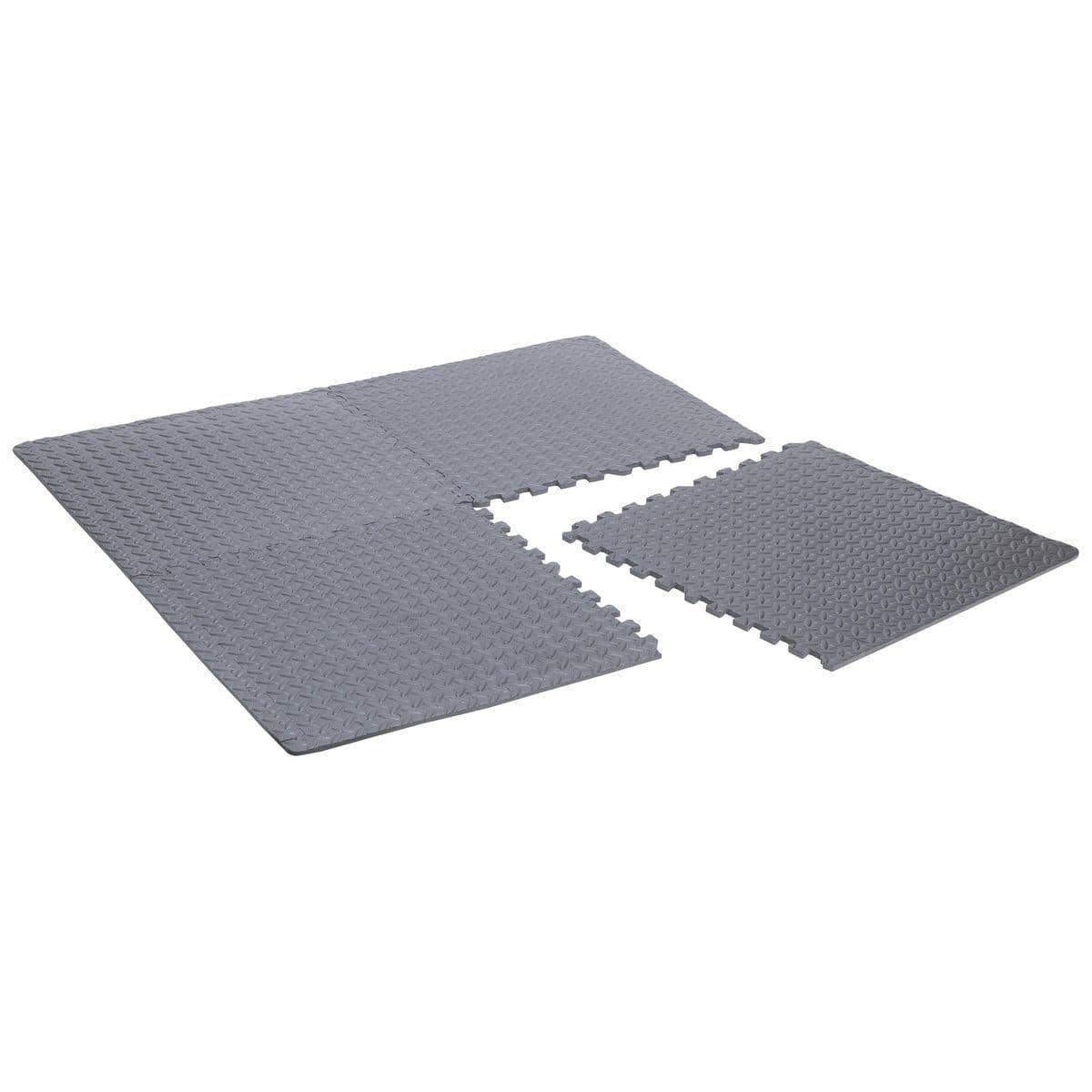
EVA interlocking tiles are how most home gyms get a floor, and the Opti set is the cheap, no-fuss way to do it: grey 10mm foam tiles that snap together, cover about 1.49m2 per four-tile pack for around £20, and come with bevelled edge strips for a tidy border. They cushion your joints, quieten the room and protect the floor underneath, and they lay in minutes with no tools.
What they are not is a drop surface. Ten millimetres of soft foam dents under rack feet and tears if you drop loaded weights on it, so treat this as a general training floor rather than a lifting platform. For the area where you set heavy weights down, a dense rubber mat is the right call. For everything else, this is a sensible, cheap floor.
What you get for the money
Each pack is four tiles of roughly 60 by 60cm at 10mm thick, covering about 1.49m2, plus the straight edge strips that clip into the border so you do not have exposed interlocking teeth around the outside. The tiles snap together like a jigsaw, so you lay a space in minutes, cut tiles with a sharp knife to fit around equipment, and lift individual tiles out to clean or replace.
That modularity is the real appeal. You buy the number of packs your space needs, extend later, and take the whole thing with you if you move. For a few pounds per square metre it is the cheapest way to turn a hard, cold, noisy floor into something you actually want to train on.
Where foam stops and rubber starts
Be realistic about density. EVA foam is light and cushioned, which is exactly what you want for floor work, stretching and body-weight training, and it takes the edge off noise and protects the floor from scuffs. But it is soft: rack and bench feet press dents into it over time, and a dropped loaded dumbbell can compress or split it, with much of the shock still reaching the floor below.
This is why foam and rubber are not rivals so much as partners. A dense NBR rubber mat handles the lifting zone where weights land, while cheap foam tiles like these floor the rest of the room. If your training is light to moderate and you set weights down with control, the foam alone is fine. If you drop iron, add rubber where it lands.
Who is it for?
Great for
- A cheap, quick floor for a general home training area
- Body-weight work, stretching, light to moderate dumbbell training
- Protecting laminate, tile or concrete and quietening a room
- Renters and anyone who wants a modular floor they can take with them
Not for
- A drop zone for heavy loaded dumbbells or barbells (use rubber)
- Under heavy racks long term, where foam dents
- Anyone wanting a single seamless surface rather than tiles
Final Verdict
The Opti interlocking mats are the budget default for a home gym floor, and a sensible one: cheap, modular, quick to lay, and genuinely good at cushioning and quietening a general training area. The honest limit is density, because 10mm of soft EVA dents under heavy kit and is not a drop surface. Pair it with a dense rubber mat for the lifting zone, or step up to the heavier-duty Rolson tiles for a garage. For most home gyms, this is the easy, affordable way to get off a cold, hard floor.
Our ratings
- Density & Thickness5/10
- Durability6/10
- Noise & Impact Dampening7/10
- Grip & Traction7/10
- Ease of Fit & Cut9/10
- Value for Money8/10
Pros & cons
The good
- +Genuinely cheap: around £20 covers about 1.5m2
- +Snap-together tiles lay in minutes with no tools or adhesive
- +Cushions joints for floor work and quietens a room
- +Protects laminate, tile or concrete from scuffs and light knocks
- +Modular, so you add packs to fit the exact space and lift out to clean
- +Bevelled edge strips give a tidy, trip-free border
- +Light and easy to store or move if you rearrange
The not-so-good
- –Only 10mm of soft EVA, so it dents under rack feet and heavy static loads
- –Not made for dropping loaded dumbbells or barbells onto
- –Foam can tear at the interlocking teeth with rough, repeated lifting
- –Textured top can hold dust and needs the odd wipe
- –Lighter tiles can shift under very dynamic work if not bordered
Frequently asked questions
Are EVA foam gym tiles any good for a home gym?
For general training, yes. EVA interlocking tiles like the Opti set cushion joints, quieten the room and protect the floor, and they are cheap and quick to lay. The limit is density: at 10mm of soft foam they dent under racks and are not made for dropping heavy weights, where dense rubber is the right surface.
How many Opti floor mat packs do I need?
Each 4-tile pack covers about 1.49m2. For a small spot under a bike or bench, one pack is enough; for a full training corner, two or three packs give roughly 3 to 4.5m2. Measure your area and round up, as the bevelled edge strips take a little off the usable size.
Can you drop weights on EVA foam mats?
Not heavy ones. The soft 10mm foam absorbs light contact but compresses and tears under dropped loaded dumbbells or barbells, and the floor beneath still takes the shock. For a drop zone, use a dense rubber mat such as the Opti NBR equipment mat over the top.
Opti foam tiles or a rubber gym mat?
Foam tiles are cheaper, cushier and modular, ideal for a general floor and body-weight work. Rubber is denser and far tougher, the right choice under heavy racks, treadmills and where you set weights down hard. Many home gyms use foam for the room and a rubber mat for the lifting zone.
Do interlocking mats damage laminate or vinyl floors?
Quality EVA tiles like these are generally fine on laminate and vinyl and actually protect them from scuffs. The thing to watch is trapped grit under the tiles, which can scratch, so lay them on a clean floor and lift and sweep occasionally. Avoid rubber mats directly on vinyl, as some can stain it.
More dumbbell reviews
 #28
Opti (Argos)
Opti Large NBR Exercise Equipment Mat (200 x 120cm)
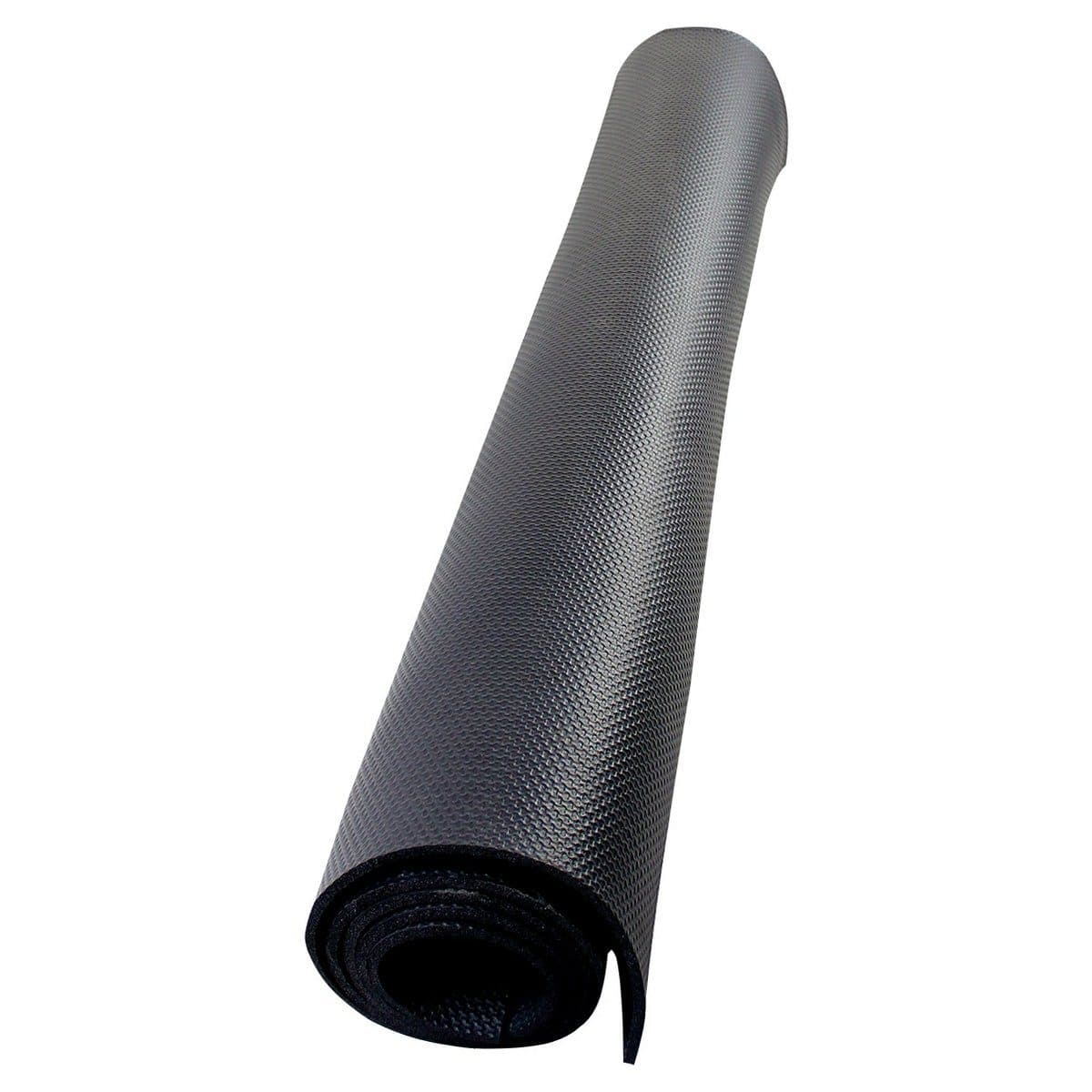
Where foam tiles cushion a room, this NBR rubber mat does the hard job: a single 200 by 120cm sheet to go under a treadmill, bike or rack, or to mark out the spot where you set weights down. It is dense, grippy and far tougher than foam, rolls away when not needed, and protects the floor from the loads foam would dent under. It is not a full-room floor, and it is not a competition drop pad, but for a lifting zone it earns its place.
- Max
- -
- Steps
- -
- Price
- ~£35-45
 #29
Rolson
Rolson 6 Piece Interlocking Floor Mats
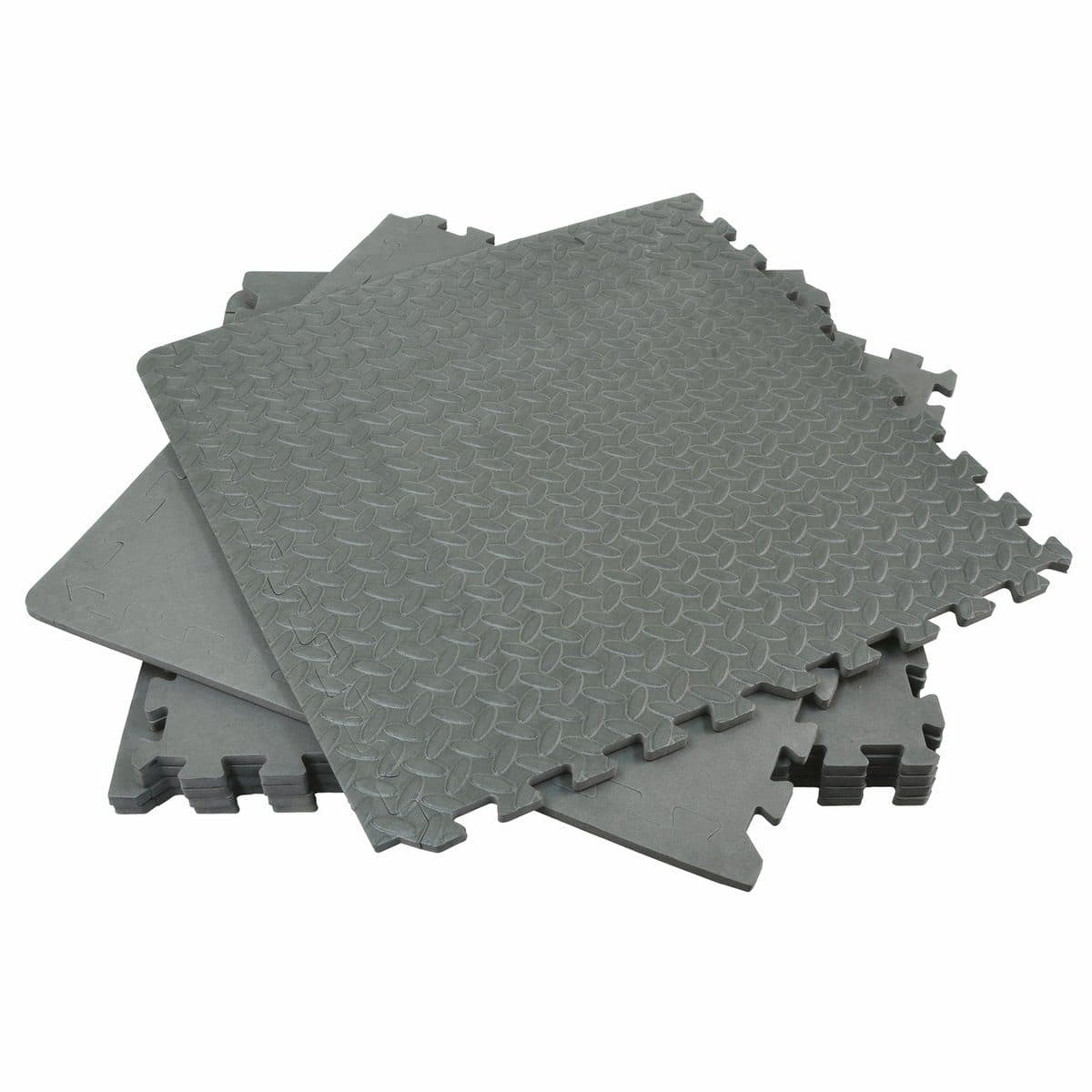
Rolson is a tools-and-garage brand, and these interlocking tiles are built for that world: six chunky 600mm EVA squares with a checker-plate top and edging strips, covering about 2.16m2 for roughly £20 to £25. That makes them a cheap way to floor a garage gym, with more coverage per pack than slimmer gym tiles. They share every foam limitation, so they are for the room, not for dropping iron.
- Max
- -
- Steps
- -
- Price
- ~£20-25 per 6-tile pack