 Rank #40
Pro Fitness (Argos)
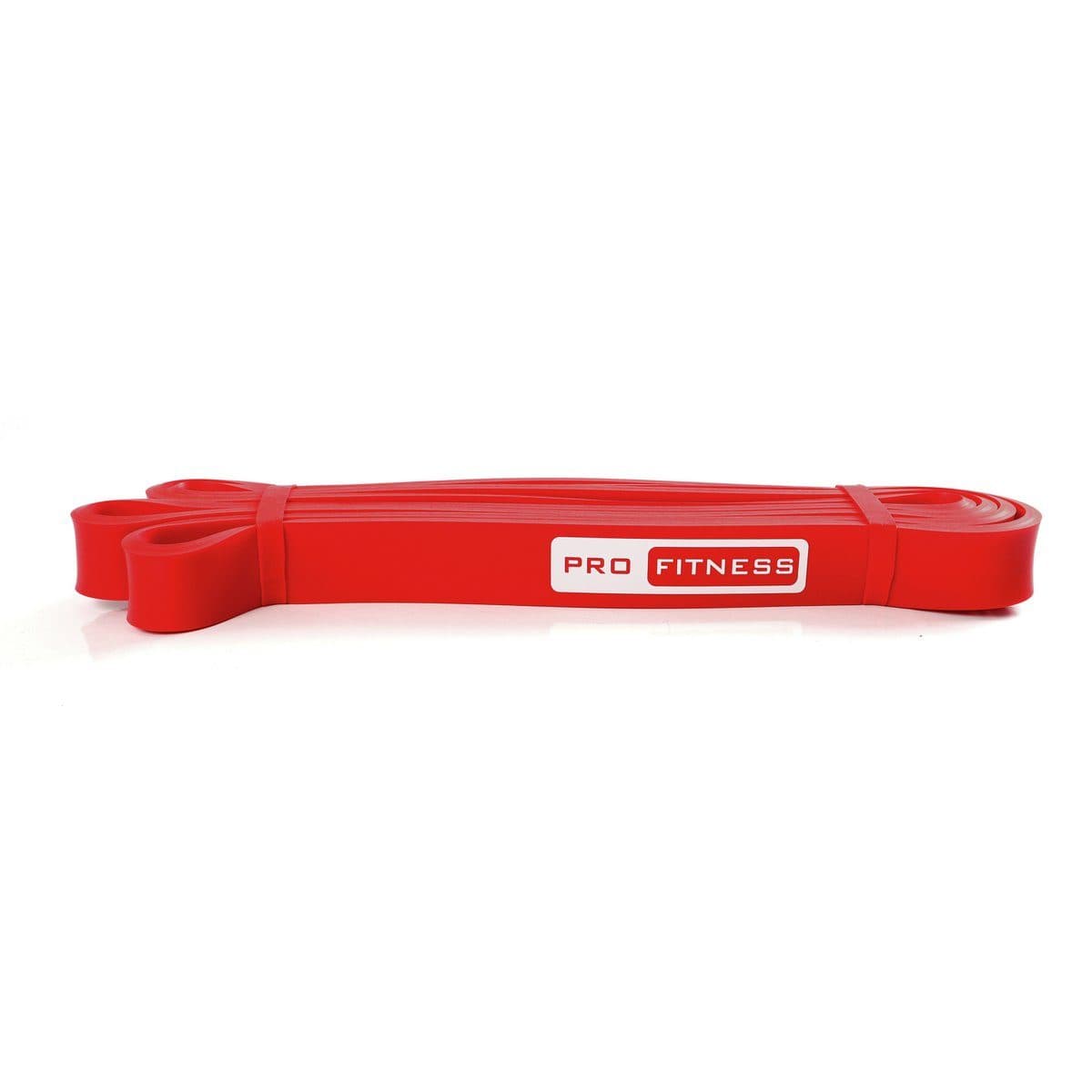
Pro Fitness Resistance Power Band Review
One big loop that makes pull-ups possible and warm-ups better: simple, cheap and genuinely useful.
Best bit
Assisted pull-ups that let you train the movement properly
Worst bit
A single band is one resistance level only
Typical price
~£10-14
Sold direct by Argos. Price last checked during testing - confirm on the retailer's site.
At a glance
- Type
- Loop power band (single)
- Width
- 22mm
- Length
- ~104cm continuous loop
- Resistance
- ~7-16kg (medium)
- Material
- Layered latex
- Main use
- Pull-up assist, mobility, barbell
- Bought from
- Argos (Pro Fitness)
- Price
- ~£12
Variants compared
| Band width | Rough resistance | Best for |
|---|---|---|
| 13mm | ~5-11kg | Lighter assist, mobility, smaller users |
| 22mm (this) | ~7-16kg | Most assisted pull-ups and dips |
| 32mm+ | ~15-30kg+ | Heavy assist and strong lifters |
The Pro Fitness power band in 60 seconds
A single continuous latex loop is one of the best-value things you can add to a home gym, and the 22mm width is the all-round choice. Loop it over a pull-up bar, put a foot in it, and it takes enough weight off that you can actually train pull-ups with control rather than failing at one. The same loop stretches shoulders and hips for mobility, and wraps onto a barbell to add resistance that builds toward lockout.
The honest limit is that it is one band, so one resistance. It is perfect for its level, but as your pull-ups improve you will want a lighter band to keep progressing. For whole-body band work with handles and an anchor, the Men's Health tube set is the versatile pick, and for glutes and mobility the Opti loops are cheaper still. As a pull-up and mobility tool, this single band earns its place.
How it makes pull-ups trainable
The pull-up is the exercise most people cannot yet do, and a power band is the standard way in. Looped over the bar with a foot or knee in it, the band supports you most at the bottom, where the movement is hardest, so you can complete controlled reps and actually build the strength to progress. Over weeks you move to a lighter band and eventually to no band at all.
It is worth understanding the feel: assistance is greatest at the bottom of the rep and fades as you rise, which is the opposite of how your strength curve works but still the most practical way to train the movement at home. A 22mm band suits most adults as a first choice; lighter or heavier widths refine it.
Beyond pull-ups: mobility and the barbell
A power band is not a one-trick loop. The same band is a genuinely good mobility tool: anchor it and you can open the shoulders, stretch the hips and hamstrings, and distract joints for warm-ups. On the barbell, looping it under the bench or over the bar adds accommodating resistance, so a press or squat gets harder toward lockout, a method borrowed from strength coaching.
That breadth is why a single cheap band is such good value: it covers assisted bodyweight work, flexibility, and advanced barbell training from one loop. The layered latex is also tougher than a thin tube, which matters when it runs over a bar edge.
Who is it for?
Great for
- Anyone training toward their first pull-up or more reps
- Mobility, stretching and warm-ups
- Adding accommodating resistance to barbell lifts
- A cheap, compact, genuinely versatile single buy
Not for
- Anyone wanting a full resistance system with handles and anchor (tube set)
- Glute activation specifically (loop bands are handier)
- Those who want multiple resistances out of the box (buy more widths)
- Replacing weights for strength
Final Verdict
For around £12, a single 22mm power band does three genuinely useful jobs: it makes pull-ups trainable, it is a good mobility tool, and it adds resistance to barbell work. The only real catch is that one band is one resistance, so progressing your pull-ups eventually means a lighter band too. As a first, versatile, cheap addition it is excellent. Round out your band training with the versatile Men's Health tube set and the cheap Opti loops for glutes and mobility.
Our ratings
- Resistance Range5/10
- Durability7/10
- Grip & Comfort7/10
- Versatility7/10
- Kit Completeness5/10
- Value for Money8/10
Pros & cons
The good
- +Makes assisted pull-ups and dips possible, so you can train the movement to build up
- +Doubles as a mobility and stretching tool for shoulders, hips and hamstrings
- +Can add accommodating resistance to barbell presses and squats
- +Layered latex loop is tougher than a thin tube and takes a bar edge well
- +Compact, cheap, and packs anywhere
- +The 22mm width suits most people's first assisted pull-up band
The not-so-good
- –A single band is one resistance level, so progress means buying lighter or heavier ones
- –Assistance is greatest at the bottom and fades at the top of a pull-up
- –Latex perishes and can snap, and a band failing on a bar is worth guarding against
- –No handles, anchor or kit: it is one loop, not a system
- –Choosing the right width for your bodyweight takes a little thought
Frequently asked questions
How does a resistance band help with pull-ups?
You loop the band over the bar and put a foot or knee in it, and it pushes you up, taking some bodyweight off the movement so you can perform more controlled reps. As you get stronger you move to a lighter band and then to unassisted pull-ups. A 22mm band suits most people's first assisted pull-up.
What width power band should I buy?
Width sets the resistance. A 13mm band gives lighter assistance and suits smaller users and mobility work; a 22mm band, like this one, is the common all-round choice for assisted pull-ups; 32mm and up give heavy assistance for stronger or heavier lifters. Many people end up with two widths to progress.
Can you use a power band for more than pull-ups?
Yes. The same loop is excellent for mobility and stretching, opening the shoulders, hips and hamstrings, and it can add accommodating resistance to barbell presses and squats, where the band gets harder as you lock out. That versatility is part of why a single power band is such good value.
Do power bands snap?
Layered latex power bands are tougher than thin tubes, but they still perish with age and can snap if nicked, over-stretched, or run over a sharp bar edge. Inspect before use, especially where it contacts the bar, keep it out of sunlight, and retire it if the latex starts to craze. A band failing under tension is worth avoiding.
Is one power band enough?
For getting started with assisted pull-ups and mobility, one 22mm band does a lot. But it is a single resistance, so as your pull-ups improve you will want a lighter band to keep progressing, and some people want a heavier one to begin with. Budget for a second band over time rather than expecting one to cover everything.
More dumbbell reviews
 #38
Men's Health
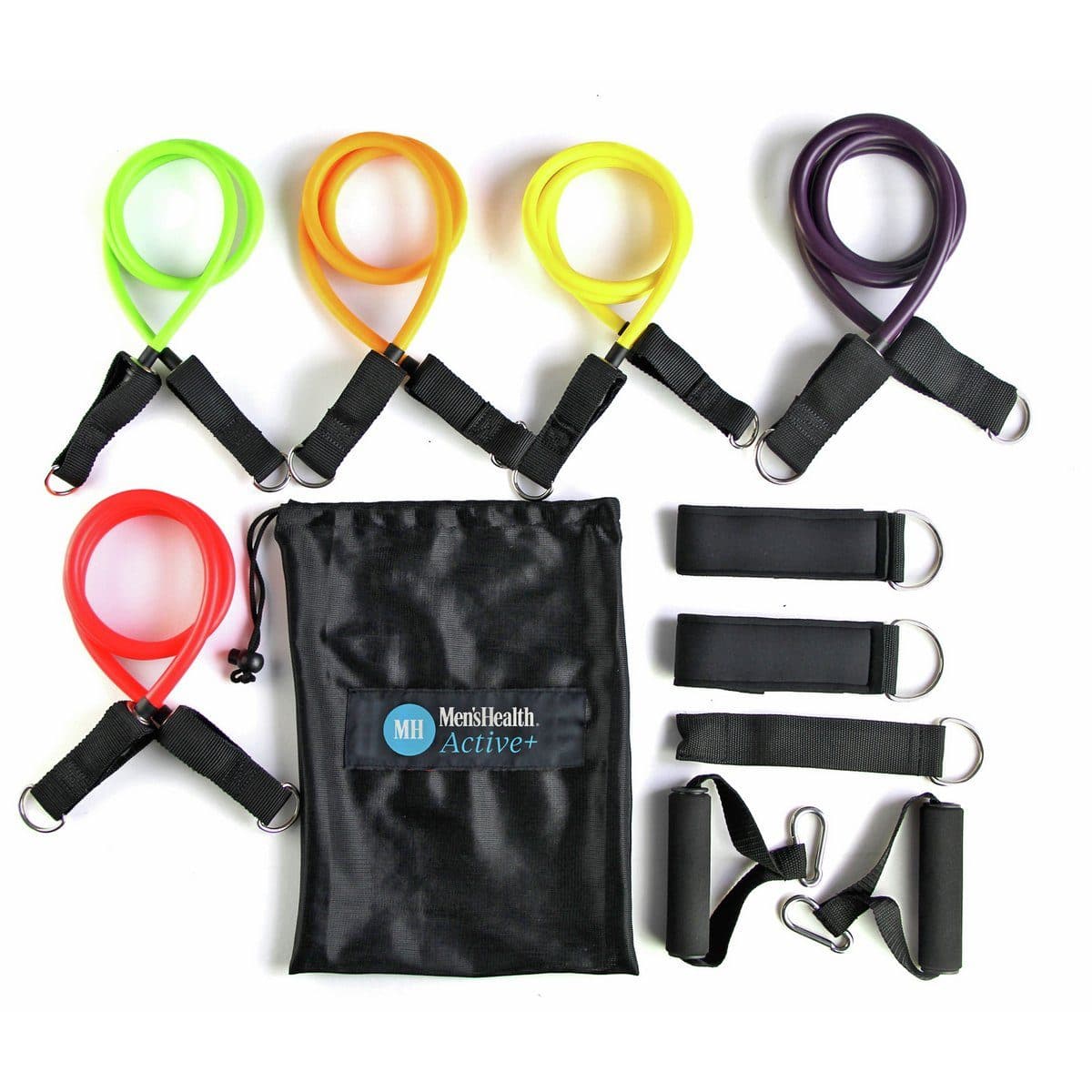
Men's Health Resistance Band Tube Set of 5
If you want one resistance kit that does nearly everything, a clip-tube set like this Men's Health one is the answer. Five colour-coded tubes clip onto two handles and stack for a combined resistance of around 45kg, and the door anchor and ankle straps open up presses, rows, curls, pull-aparts and kickbacks. It is not studio-grade, the clips and latex are the parts to watch, but for the money it is the most versatile home option.
- Max
- -
- Steps
- -
- Price
- ~£25-30
 #39
Opti (Argos)
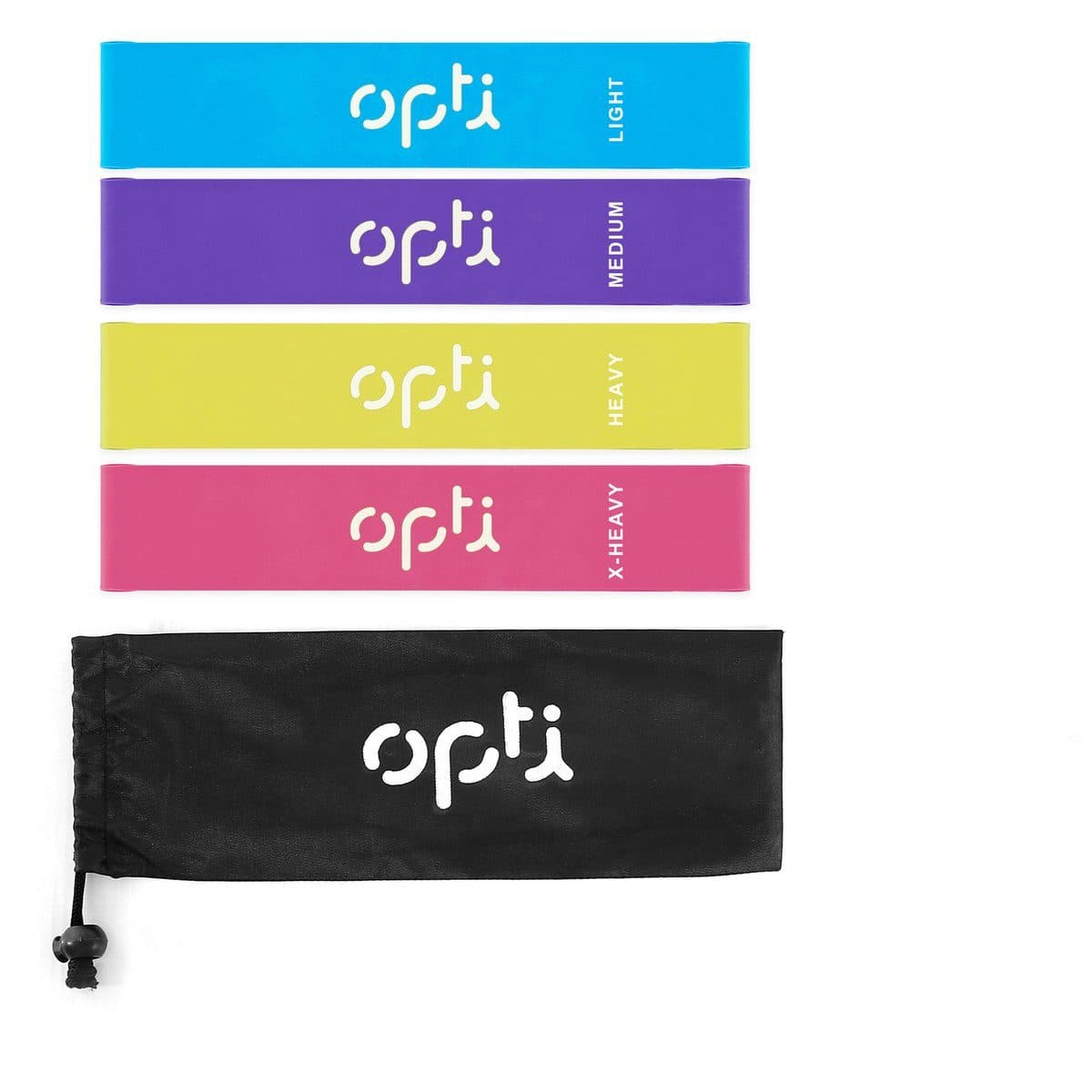
Opti Resistance Loops Set of 4
Mini loop bands are the cheapest way to make lower-body and warm-up work harder, and this Opti set of four covers the useful range from light to extra-heavy for a few pounds. They are brilliant for glute bridges, banded squats, lateral walks and shoulder prehab. They are also a narrow tool: short closed loops that do upper-body and heavy work poorly, where a tube set or weights are far better.
- Max
- -
- Steps
- -
- Price
- ~£6-10
 #34
Men's Health
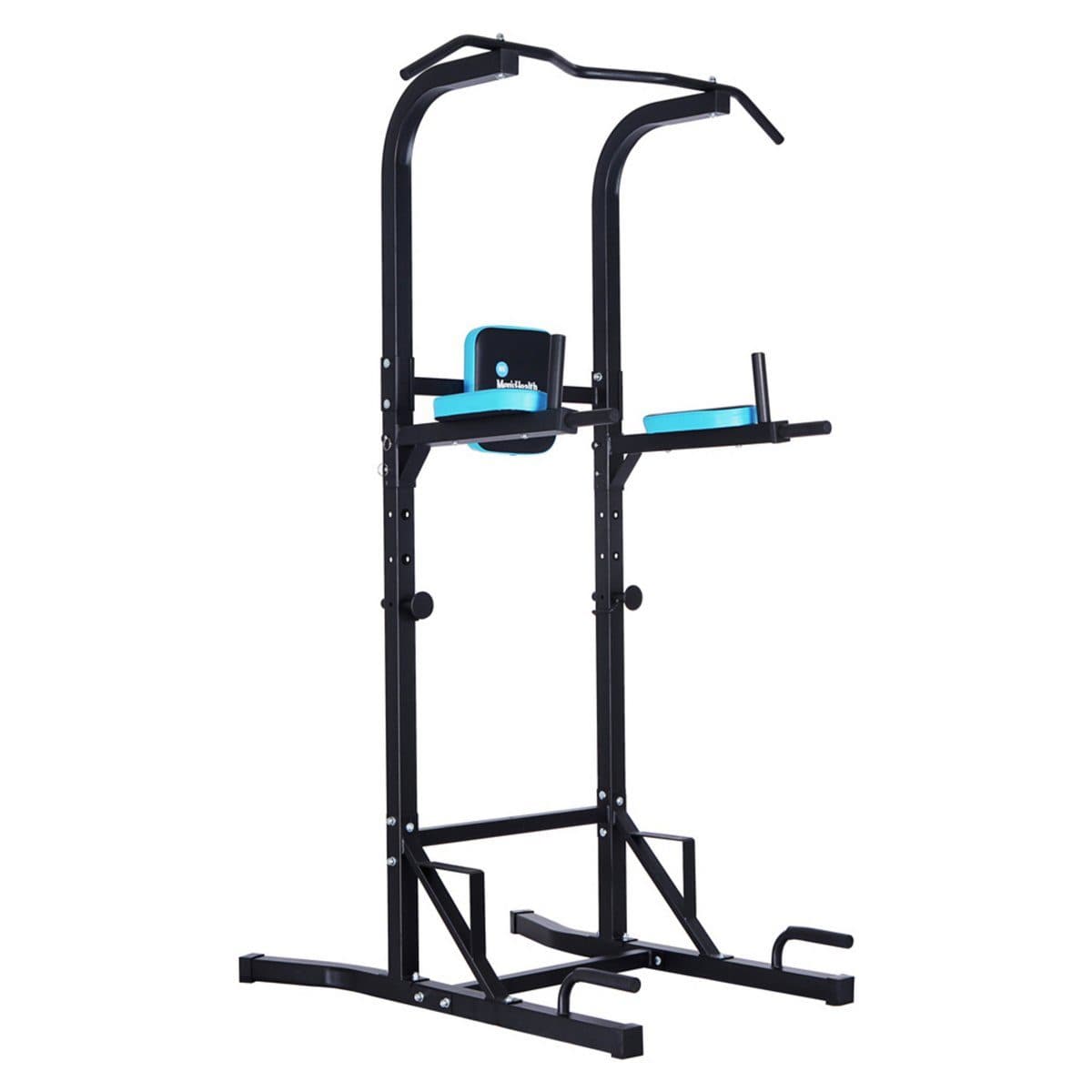
Men's Health Power Tower
If you want to train pull-ups properly without trusting a door frame, a power tower is the answer, and this Men's Health one is a sensible home pick. Rated to 110kg, it adds dips, leg raises and push-ups to a stable multi-grip pull-up bar, with no fittings to damage your doorway. The trade is size: it stands over two metres tall with a 94 by 123cm footprint and needs assembling, so it suits a garage or spare room, not a hallway.
- Max
- -
- Steps
- -
- Price
- ~£100