 Rank #34
Men's Health
Men's Health Power Tower Review
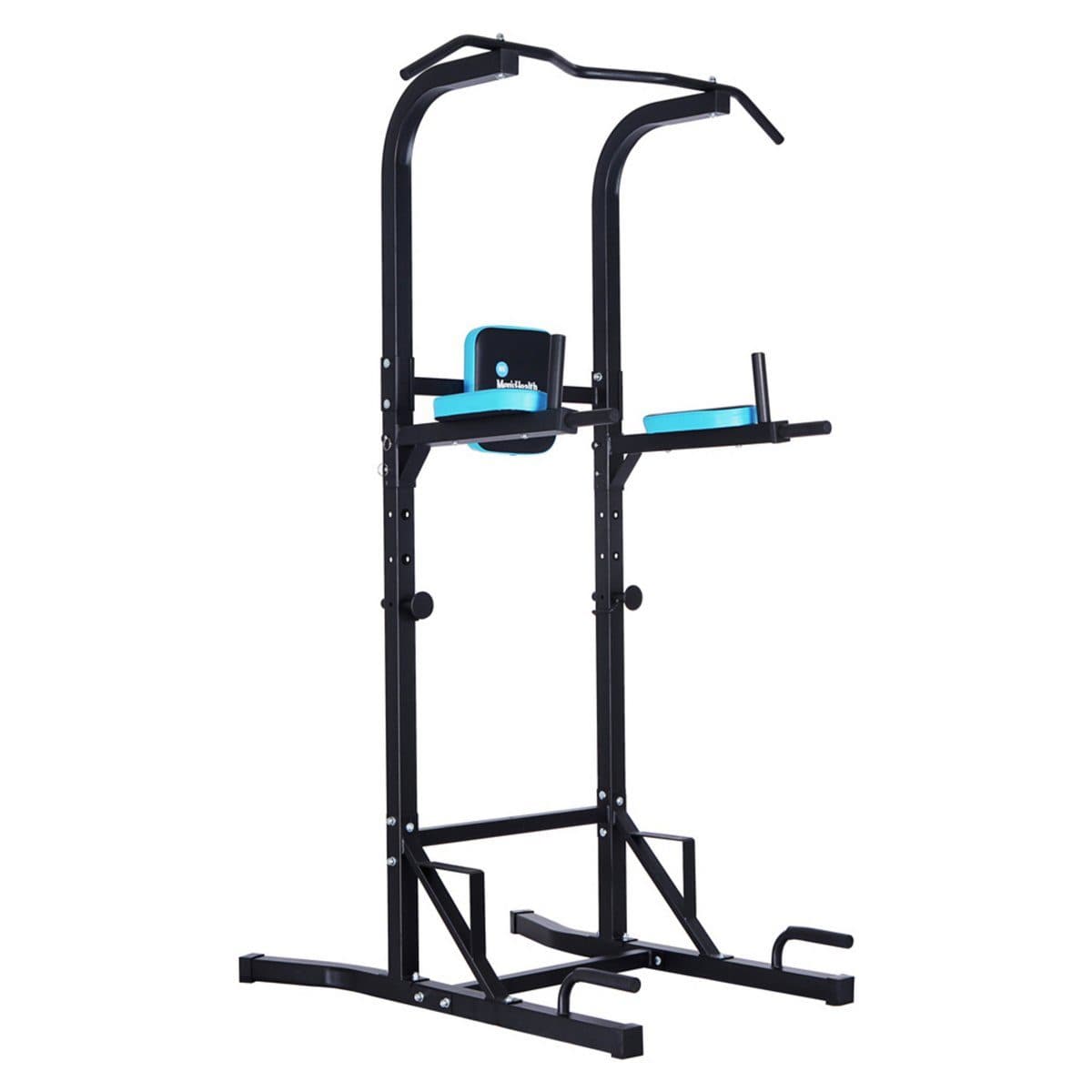
A sturdy freestanding pull-up, dip and leg-raise station for homes that can spare the floor.
Best bit
A stable 110kg station with pull-ups, dips and leg raises in one
Worst bit
A large, heavy freestanding frame that needs real floor space
Typical price
~£100
Sold direct by Argos. Price last checked during testing - confirm on the retailer's site.
At a glance
- Type
- Freestanding power tower
- Max user weight
- 110kg
- Dimensions
- H210 x W94 x D123cm
- Unit weight
- 35kg
- Stations
- Pull-up, dip, VKR, push-up
- Grips
- Wide, neutral, narrow pull-up
- Assembly
- Self-assembly required
- Price
- ~£99.99
Variants compared
| Station | Works | Notes |
|---|---|---|
| Pull-up bar | Back, lats, biceps | Wide, neutral and narrow grips up top |
| Dip handles | Chest, triceps | Parallel bars at the sides |
| VKR pad | Core, hip flexors | Back pad and arm rests for knee/leg raises |
| Push-up grips | Chest, shoulders | Low handles at the base |
The Men's Health Power Tower in 60 seconds
A power tower is the honest answer to training pull-ups at home without gambling on a door frame, and this Men's Health one is a sensible, well-priced version. It is a freestanding steel station rated to 110kg, with a multi-grip pull-up bar on top, dip handles at the sides, a back pad for knee and leg raises, and push-up grips at the base: four stations covering most bodyweight training in one frame, for around £100.
The catch is simply its size. It stands 210cm tall with a 94 by 123cm footprint, weighs 35kg, and needs assembling where it will live. That makes it a garage, spare-room or gym-corner buy. If you have that space, it is sturdier and more capable than any doorway bar; if you do not, a doorway bar is the realistic choice.
Why choose freestanding over a doorway bar?
The single biggest reason is trust. Doorway bars, whether they wedge in or hook over the architrave, depend on your specific door frame being the right width, depth and strength, and the most common home-gym mishap is a cheap bar slipping or pulling trim off the wall. A freestanding tower removes that variable entirely: it stands on its own wide base and carries the load straight to the floor.
It also does more. Where a doorway bar is pull-ups and maybe a couple of grips, the tower adds proper dips and a vertical knee-raise station, which together cover chest, triceps and core in a way no doorway bar can. For anyone building a genuine bodyweight routine rather than just knocking out occasional pull-ups, that versatility is the point.
How stable is it, and who is the 110kg limit for?
The 110kg maximum user weight is both a reassurance and a limit. It is higher than the 100kg typical of doorway bars, and because the load goes through a wide base rather than a door lip, owners report it feels solid for controlled pull-ups and dips. That said, 110kg is a hard ceiling: a heavier user, or anyone wanting to add a dip belt with plates for weighted pull-ups, is over the rating and should look at a heavier commercial tower or a wall-mounted bar.
Stability also depends on you. Build it completely, tighten every bolt, stand it on a flat solid floor, and train with control. Freestanding towers can rock if you kip or swing hard, so a mat underneath and smooth reps keep it planted. None of this is unusual for the category; it is simply how towers are used safely.
The space and assembly reality
Be clear-eyed about the footprint before buying. At 210cm tall you need a ceiling with headroom to hang from the bar, and the 94 by 123cm base plus swing clearance means it occupies a real corner of a room permanently. It is 35kg of steel and self-assembles, so plan to build it in the room it will stay in, because shifting it afterwards is a two-person job.
That permanence is the trade for the sturdiness. A doorway bar can be taken down and stored in seconds; the tower cannot. If your home gym is a shared living space you clear away each day, the tower is the wrong tool. If you have a garage or spare room where it can simply live, it earns its place.
Who is it for?
Great for
- Garages and spare rooms with the floor space and ceiling height
- Anyone who wants pull-ups, dips and leg raises in one sturdy frame
- Users up to 110kg who do not trust doorway fittings
- People building a real bodyweight routine, not just occasional pull-ups
Not for
- Small flats or shared living spaces with no permanent corner
- Low ceilings or loft rooms without hanging clearance
- Users over 110kg, or anyone wanting weighted pull-ups with a belt
- Anyone who wants something portable they can take down daily
Final Verdict
The Men's Health Power Tower is the pick if you have the room: a stable, 110kg-rated freestanding station that handles pull-ups, dips, leg raises and push-ups for around £100, with nothing to damage your doorway. The honest limits are its size, its weight and the self-assembly, which make it a garage or spare-room buy rather than a hallway one. If space is tight or you want something portable, the Pro Fitness Multi doorway bar is the practical choice; if you want the sturdiest, most capable home pull-up station for the money, this is it.
Our ratings
- Stability & Safety8/10
- Grip Positions8/10
- Build & Capacity8/10
- Assembly6/10
- Footprint5/10
- Value for Money8/10
Pros & cons
The good
- +Rated to 110kg, higher and more reassuring than most doorway bars at 100kg
- +Four stations in one: pull-ups, dips, knee/leg raises and push-ups
- +No fittings, so nothing to damage a door frame or plaster
- +Multiple pull-up grips: wide, neutral and narrow in one frame
- +Stable wide base that does not rely on a doorway bracing correctly
- +Strong value for a full bodyweight station at around £100
The not-so-good
- –Large: over two metres tall with a 94 by 123cm footprint
- –Heavy at 35kg and needs self-assembly in its final position
- –Not portable: once built it stays put, unlike a doorway bar
- –110kg ceiling still rules out heavier users adding a weight belt
- –Overkill if you only want occasional pull-ups in a spare doorway
Frequently asked questions
Is the Men's Health Power Tower sturdy enough for pull-ups?
Yes, within its 110kg user limit. Being freestanding with a wide base, it does not depend on a door frame bracing correctly, which is the main failure point of cheaper doorway bars. Owners report it is stable for controlled pull-ups and dips; as with any tower, build it fully and tighten every bolt.
How much space does the Power Tower need?
It is H210 x W94 x D123cm, so you need a room with at least a 2.1m ceiling and roughly a 1 x 1.3m floor area plus clearance to hang and swing your legs. That makes it a garage, spare-room or gym-corner piece, not something for a hallway or a low-ceilinged loft.
What exercises can you do on a power tower?
Four main movements: pull-ups and chin-ups on the top bar (wide, neutral and narrow grips), dips on the side handles, knee or leg raises against the VKR back pad, and push-ups on the low grips. It covers most upper-body and core bodyweight training in one frame.
Does the Power Tower need to be bolted to the floor?
No, it is freestanding and designed to stand on a level surface under its own weight and base. Place it on a flat, solid floor, ideally with a mat underneath, and keep movements controlled. If you kip or swing aggressively, any freestanding tower can rock, so train with control.
Power tower or a doorway pull-up bar?
A doorway bar like the Pro Fitness Multi is cheaper, smaller and portable, but limited by your door frame and around 100kg. The power tower costs more and takes real floor space, but is sturdier, adds dips and leg raises, and never touches your doorway. Choose the tower if you have the room and want a proper station.
More dumbbell reviews
 #36
Pro Fitness
Pro Fitness Multi Pull Up Bar
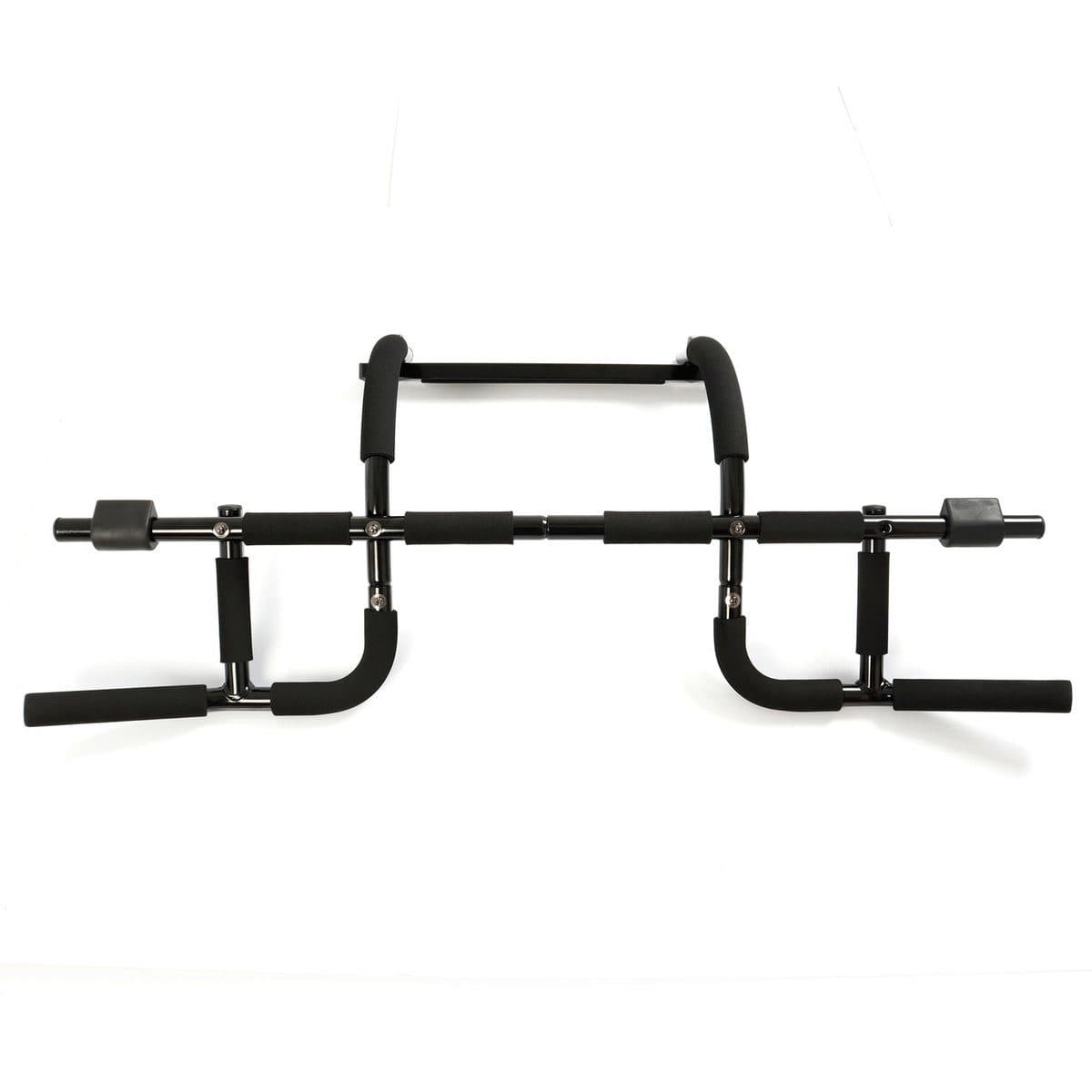
This is the familiar hook-over doorway bar done well: wide, neutral and close pull-up grips plus handles for push-ups and dips, rated to 100kg, for around £28. It braces over the architrave with no screws, so it goes up and comes down in seconds. The catch is fit: your door frame has to be the right width, depth and have a top lip to brace against, so check your doorway before buying.
- Max
- -
- Steps
- -
- Price
- ~£28
 #37
Opti (Argos)
Opti 63-95cm Telescopic Pull Up Bar
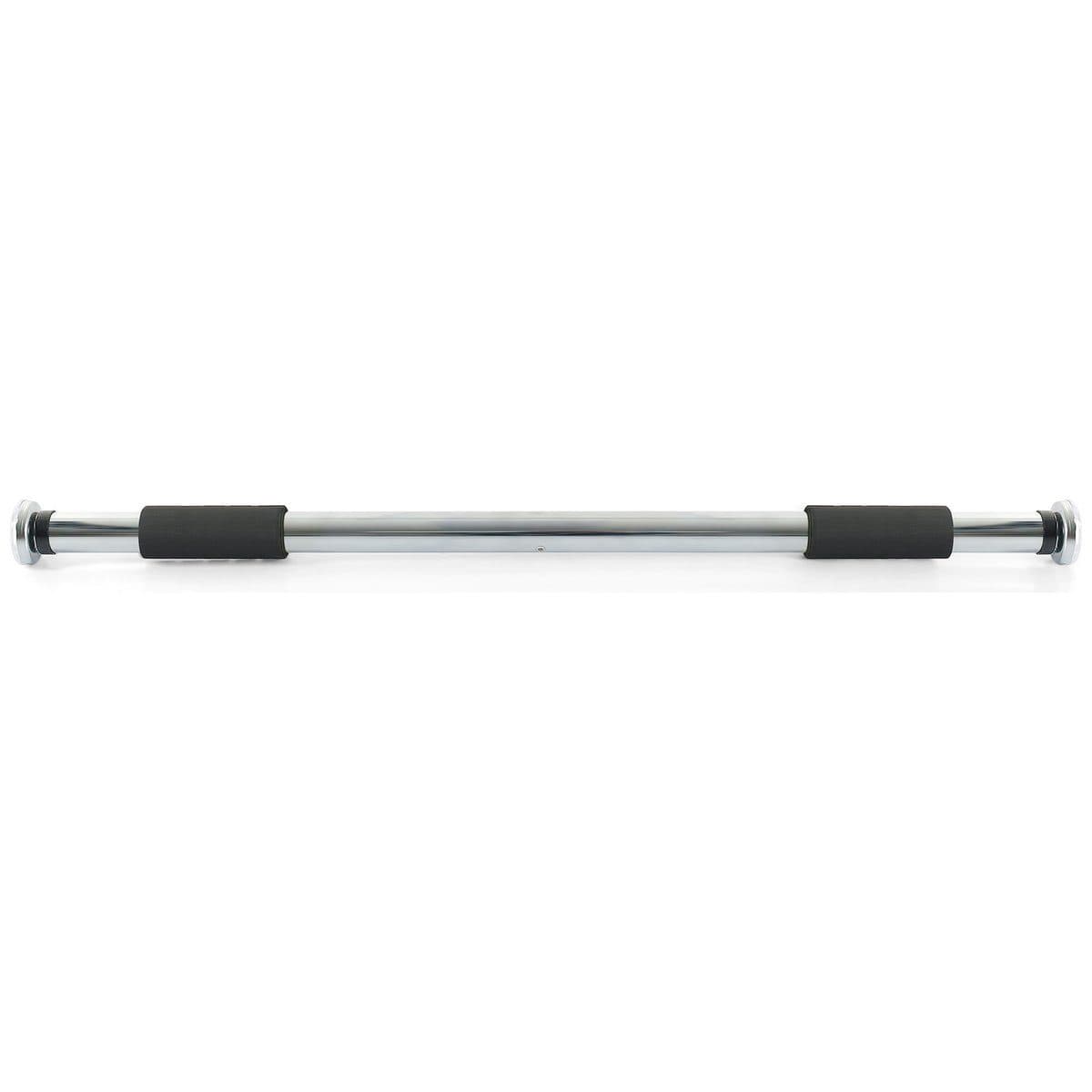
At around £12 the Opti telescopic bar is the cheapest sensible way to start pull-ups: a chrome steel bar that extends to wedge inside a 63 to 95cm doorway, rated to 100kg, with foam grips. It is tidy and tool-free, but it is a single-grip pressure-fit bar, so you must install it correctly and trust friction, which is the safety point to understand before you pull on it.
- Max
- -
- Steps
- -
- Price
- ~£12