 Rank #35
GymGear
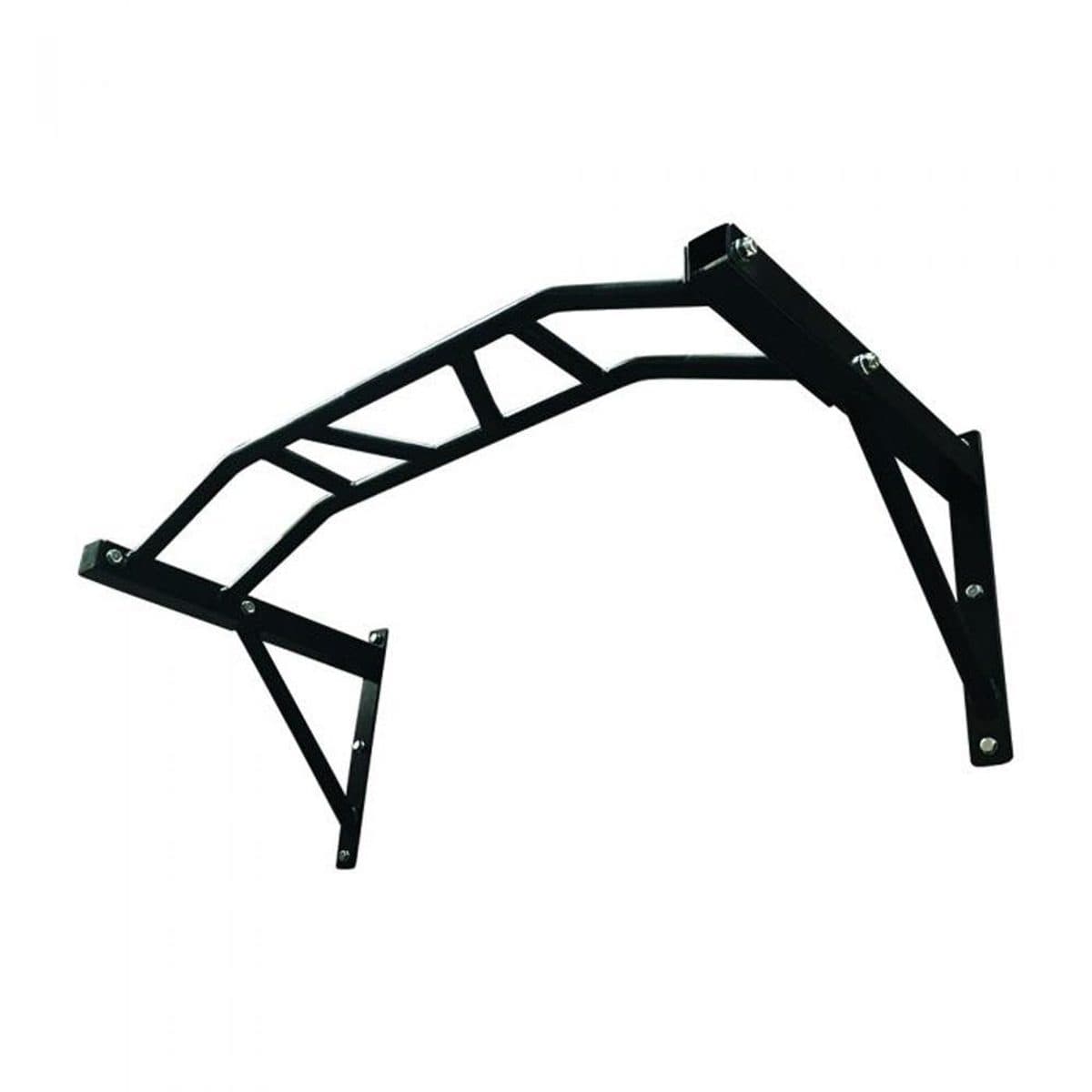
GymGear Wall-Mounted Pull-Up Bar Review
The sturdiest, most honest pull-up bar there is, if you have a solid wall to bolt it to.
Best bit
Bolt-on steel that holds far more than any doorway bar
Worst bit
Permanent: needs a solid wall and drilling
Typical price
~£50-70
Sold direct by Best Gym Equipment. Price last checked during testing - confirm on the retailer's site.
At a glance
- Type
- Wall-mounted, fixed
- Grips
- Wide, close, neutral, angled
- Frame
- Heavy-gauge steel
- Load rating
- High (home / light commercial)
- Fixing
- Bolts to masonry or studs
- Wall clearance
- Projects to clear the head
- Bought from
- Best Gym Equipment
- Price
- ~£50-70
Variants compared
| Grip | Targets | Notes |
|---|---|---|
| Wide overhand | Lats, upper back | The classic pull-up |
| Close / neutral | Biceps, mid-back | Easier on the shoulders |
| Angled multi-grip | Mixed | Vary the stimulus and comfort |
The GymGear wall bar in 60 seconds
If you take pull-ups seriously and have a solid wall to bolt to, a wall-mounted bar is the best answer, and this GymGear multi-grip bar is a commercial-grade example at a home price. Fixed into masonry or studs, it carries far more than any doorway bar's roughly 100kg limit, offers wide, close, neutral and angled grips, and projects from the wall so you can hang and swing freely.
The only real catch is permanence. You need a sound wall, a drill and the right anchors, and you commit to one location. If that suits your space it is the sturdiest, most honest pull-up option here. If you cannot drill or want to train dips and leg raises too, the freestanding Men's Health power tower is the better fit, and for renters the doorway bars leave no marks.
Why a wall bar beats a doorway bar
Every doorway bar, telescopic or leverage, is limited by your door frame: it borrows strength from trim and architrave, and almost all are rated to around 100kg. A wall bar removes that constraint entirely. Bolted into a load-bearing wall, it is as strong as the wall and the fixings, which for a commercial-grade bar means a high rating with real headroom.
That changes what you can do. Heavier users who are near a doorway bar's limit can train with confidence, and adding weight with a dip belt becomes realistic. The multiple grips also let you shift between wide pull-ups for the lats, close and neutral grips that are kinder to the shoulders, and angled holds, all from one fixed bar.
Installing it, and the wall you need
This is the part to plan before buying. The bar bolts to the wall through sturdy brackets, and it is only ever as safe as what it is fixed to. A solid brick or block wall with the correct masonry anchors is ideal; a timber-stud wall works if you locate the studs and bolt into them. What will not hold a person is plasterboard alone, so never rely on cavity fixings in a hollow wall.
You also need clearance: space in front of the wall to hang and pull without catching it, and nothing overhead. Budget a little DIY time, use the right fixings for your wall type, and mount it where it can stay. Done properly it is a lifetime fixture; done into the wrong wall it is dangerous, which is the one thing to get right.
Who is it for?
Great for
- Anyone serious about pull-ups with a solid wall to fix to
- Heavier users beyond a doorway bar's 100kg limit
- Weighted pull-ups with a dip belt
- A permanent, compact, sturdy home setup
Not for
- Renters or anyone who cannot drill into the wall
- Hollow or plasterboard-only walls with no studs
- People who want to train dips and leg raises too (power tower)
- Occasional, light use where a doorway bar is simpler
Final Verdict
The GymGear wall-mounted bar is the sturdiest pull-up option here and the one to choose if you have a solid wall and take the movement seriously: commercial-grade steel, a high load rating, multiple grips, and none of a doorway bar's frame limits. The price of that is permanence, a drill and the right wall. If you cannot drill or want dips and leg raises in one unit, the freestanding Men's Health power tower is the pick; renters should stick with a doorway bar. For a committed home gym with a good wall, this is the best buy.
Our ratings
- Stability & Safety9/10
- Grip Positions9/10
- Build & Capacity9/10
- Fit & Install6/10
- Doorway/Wall Suitability7/10
- Value for Money8/10
Pros & cons
The good
- +Bolted to a solid wall, it is far sturdier than any doorway bar
- +High load rating, so heavier users and weighted pull-ups are on the table
- +Multiple grips (wide, close, neutral, angled) for varied back and arm work
- +Projects from the wall to clear your head and let you swing freely
- +Commercial-grade steel at a home price
- +No door frame involved, so no frame-fit or marking worries
The not-so-good
- –Permanent: you must drill and bolt it into a sound wall
- –Needs solid masonry or properly located studs, not plasterboard alone
- –You commit to one location: it does not move like a doorway bar
- –Installation takes tools and a little DIY confidence
- –Overkill if you only want occasional, light pull-ups
Frequently asked questions
Is a wall-mounted pull-up bar better than a doorway bar?
For strength and safety, yes. Bolted to a solid wall, it carries far more weight than a doorway bar's roughly 100kg limit, takes multiple grips, and does not depend on your door frame. The trade is permanence: you drill into the wall and commit to one spot, where a doorway bar is portable and leaves no marks.
What wall do you need for a wall-mounted pull-up bar?
A sound, load-bearing wall: solid brick or block, or timber studs you can locate and bolt into. Plasterboard alone will not hold a person, so fix into masonry with the right anchors or into studs. If you are unsure of your wall, that is the strongest reason to choose a freestanding power tower instead.
Can you do weighted pull-ups on this bar?
Within its rating, yes. Because it bolts to a solid wall, a commercial-grade wall bar like this has far more headroom than a doorway bar, so adding a dip belt and plates is realistic where it is not on a doorway bar rated to 100kg. Always stay inside the stated load rating and check your fixings.
How much does a wall-mounted pull-up bar stick out?
Enough to clear your head and let you hang and pull without catching the wall, typically a solid projection on sturdy brackets. That clearance is part of why it feels secure. Make sure you have the space in front of the wall and nothing overhead before fixing it.
GymGear wall bar or a freestanding power tower?
Choose the wall bar if you have a solid wall and want the sturdiest, most compact fixed option. Choose a freestanding power tower like the Men's Health if you cannot or would rather not drill, or you want dips and leg raises in the same unit. Both are far sturdier than any doorway bar.
More dumbbell reviews
 #34
Men's Health
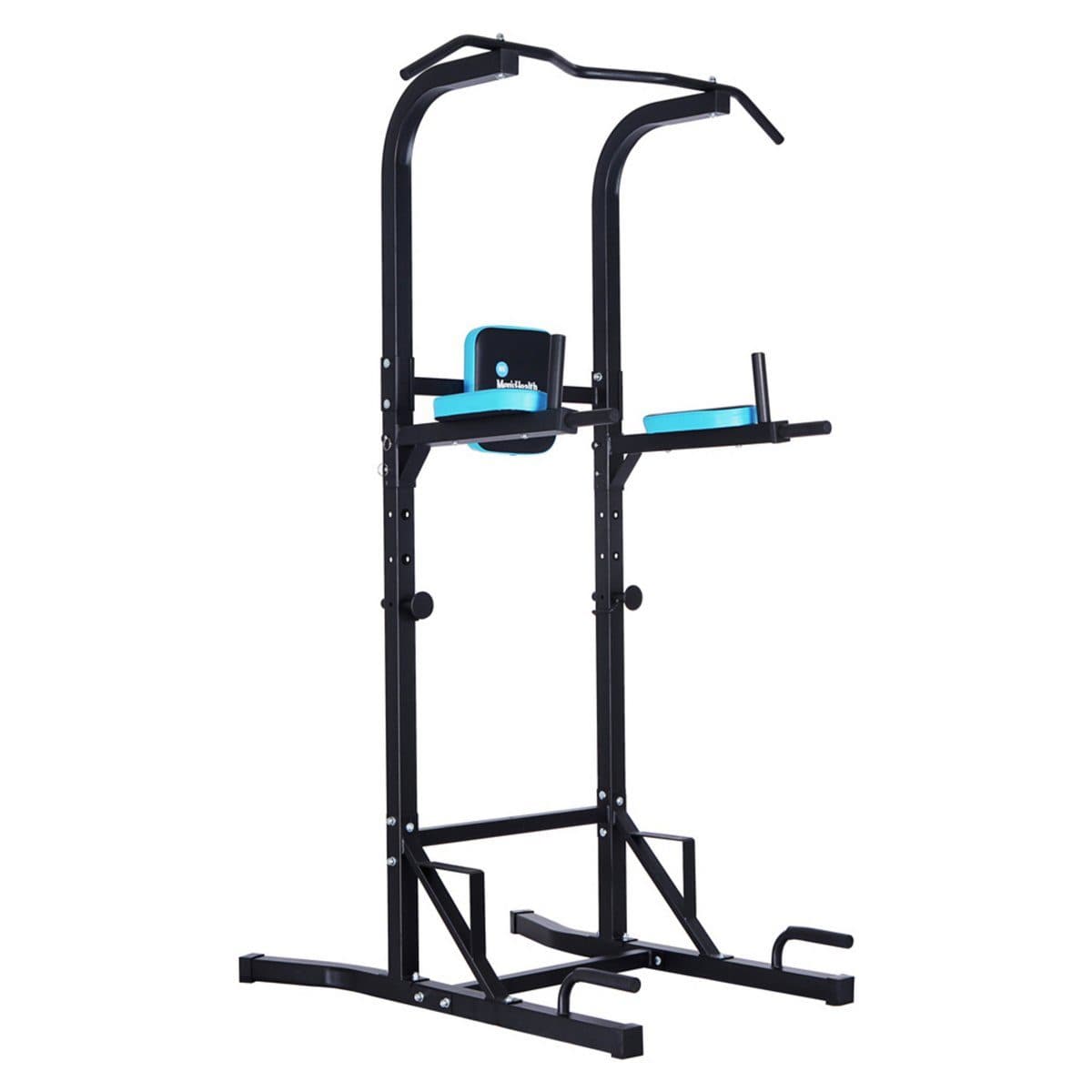
Men's Health Power Tower
If you want to train pull-ups properly without trusting a door frame, a power tower is the answer, and this Men's Health one is a sensible home pick. Rated to 110kg, it adds dips, leg raises and push-ups to a stable multi-grip pull-up bar, with no fittings to damage your doorway. The trade is size: it stands over two metres tall with a 94 by 123cm footprint and needs assembling, so it suits a garage or spare room, not a hallway.
- Max
- -
- Steps
- -
- Price
- ~£100
 #36
Pro Fitness
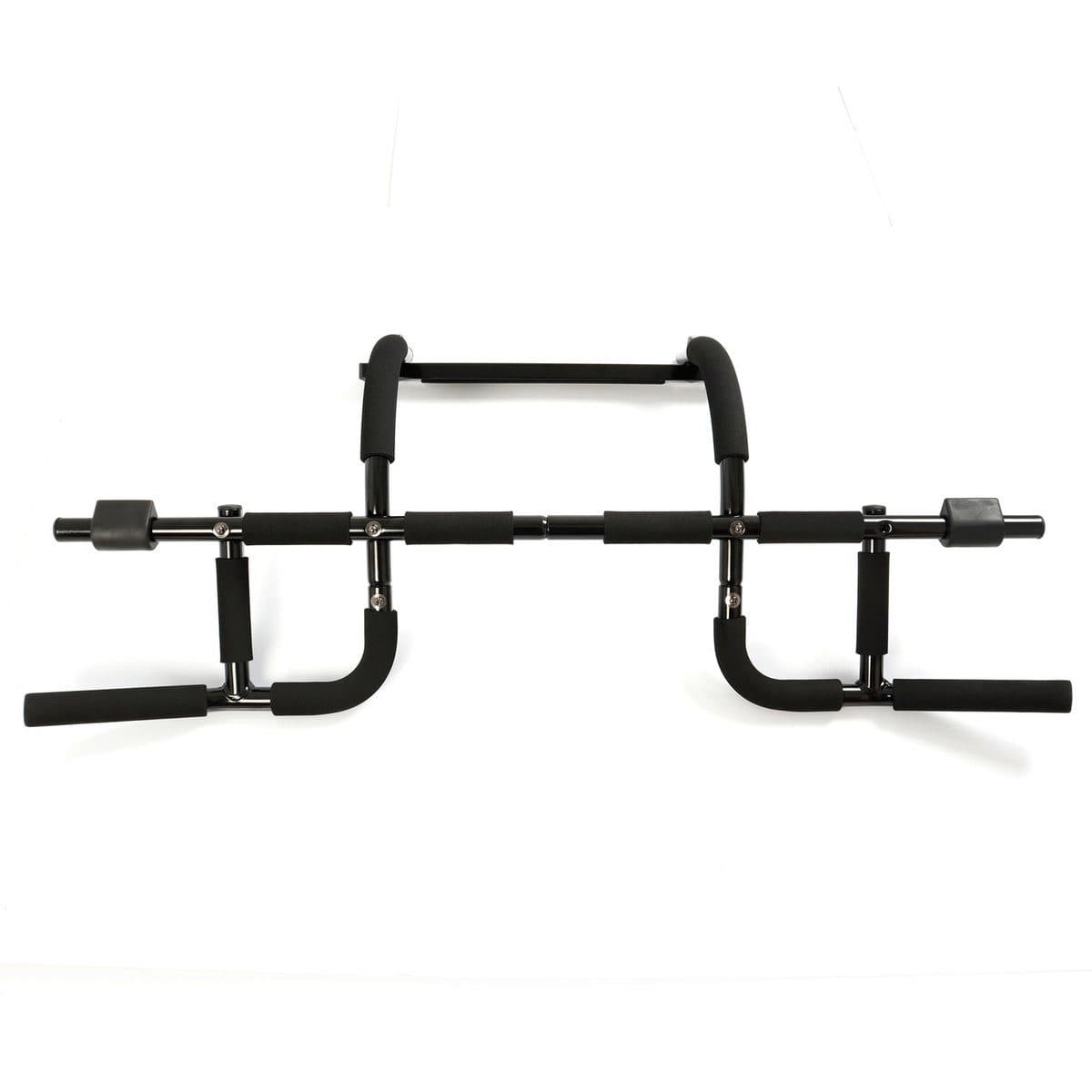
Pro Fitness Multi Pull Up Bar
This is the familiar hook-over doorway bar done well: wide, neutral and close pull-up grips plus handles for push-ups and dips, rated to 100kg, for around £28. It braces over the architrave with no screws, so it goes up and comes down in seconds. The catch is fit: your door frame has to be the right width, depth and have a top lip to brace against, so check your doorway before buying.
- Max
- -
- Steps
- -
- Price
- ~£28
 #37
Opti (Argos)
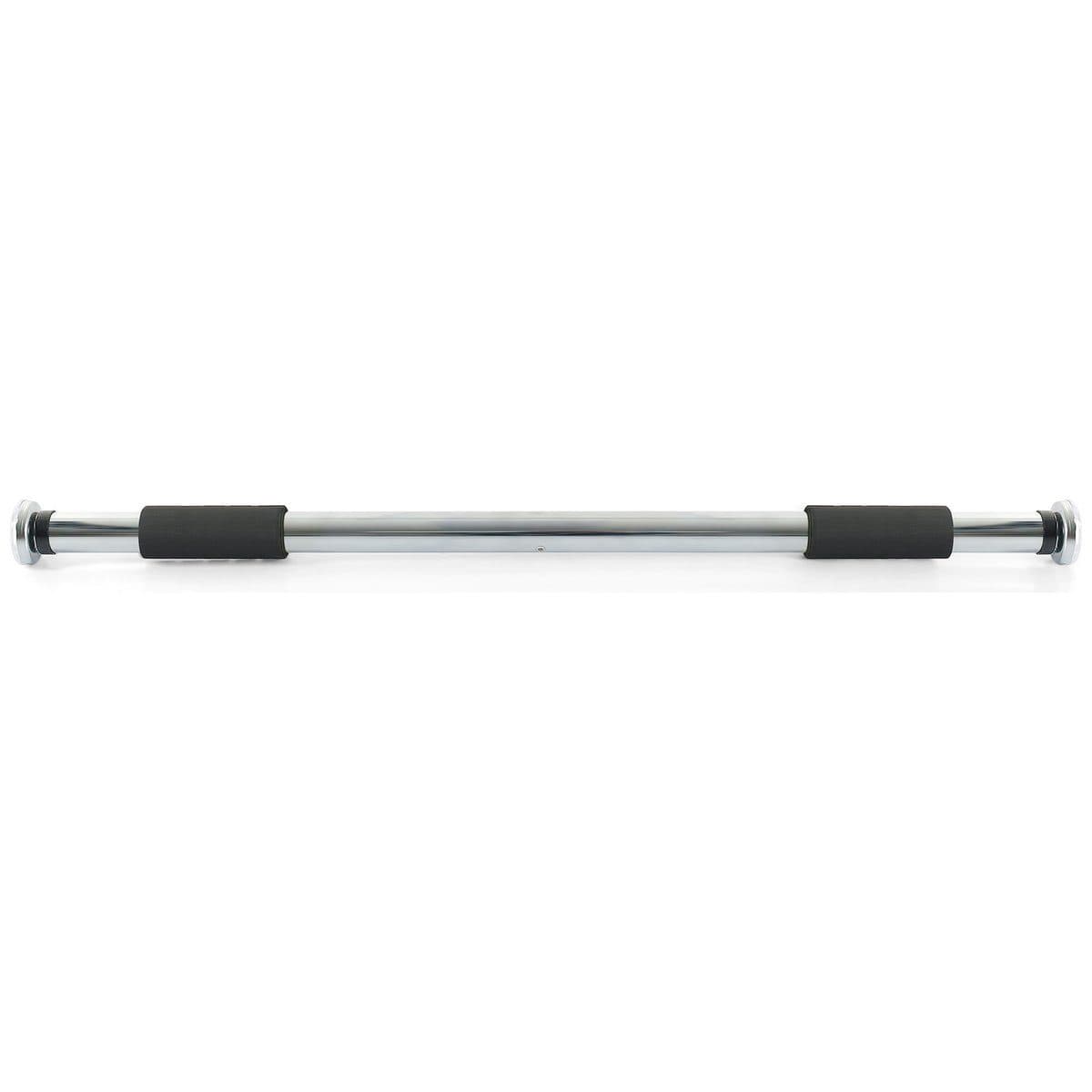
Opti 63-95cm Telescopic Pull Up Bar
At around £12 the Opti telescopic bar is the cheapest sensible way to start pull-ups: a chrome steel bar that extends to wedge inside a 63 to 95cm doorway, rated to 100kg, with foam grips. It is tidy and tool-free, but it is a single-grip pressure-fit bar, so you must install it correctly and trust friction, which is the safety point to understand before you pull on it.
- Max
- -
- Steps
- -
- Price
- ~£12