 Rank #22
Core
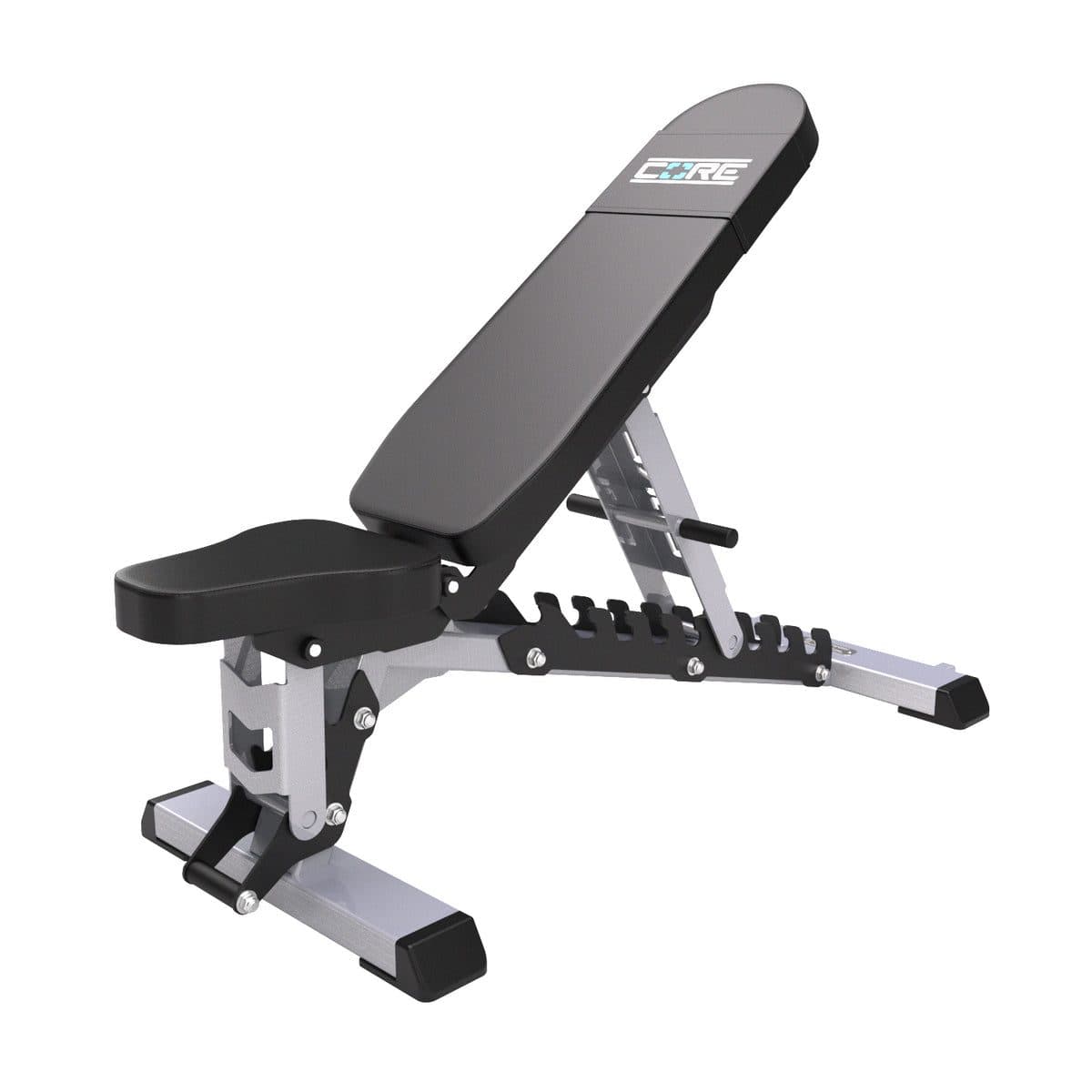
Core Predator Adjustable Weight Bench Review
A near-commercial FID bench that barely moves under load: the one to buy if you press heavy.
Best bit
Heavy steel frame that stays planted under heavy pressing
Worst bit
Pricier and non-folding, so it needs permanent space
Typical price
~£150-200
Sold direct by Best Gym Equipment. Price last checked during testing - confirm on the retailer's site.
At a glance
- Type
- FID (flat / incline / decline)
- Backrest positions
- 7
- Seat positions
- Multiple
- Frame
- Heavy-gauge steel
- Load rating
- High (home / light commercial)
- Folds
- No
- Bought from
- Best Gym Equipment
- Price
- ~£150-200
Variants compared
| Spec | Core Predator | Folding budget bench |
|---|---|---|
| Frame | Heavy-gauge steel | Lighter folding steel |
| Stability under load | Planted | Some flex/wobble |
| Folds for storage | No | Yes |
| Best for | Heavy pressing, buy-once | Light use, small spaces |
The Core Predator bench in 60 seconds
The Core Predator is the bench you buy when you have outgrown wobbly folding benches and want something that feels like the one in a gym. A heavy-gauge steel frame, flat-incline-decline across seven back positions, a high load rating and thick, firm pads make it planted and reassuring under heavy dumbbell and barbell pressing.
The trade-offs are space and price. It does not fold, so it needs a permanent spot, and it costs more than the folding UFC FID or budget Pro Fitness. But if you press heavy and have the room, it is a buy-once bench that removes the flex and wobble that plague cheaper options. For light dumbbell work it is more than you need; for serious pressing it is the pick.
Why the frame matters
The single most common complaint about home benches is movement: a frame that flexes, rocks or shifts as you press, which is distracting at best and unsafe at worst. The Core Predator answers that with a heavy-gauge steel frame and a high load rating, so it stays put under the kind of load a committed home lifter actually uses, their bodyweight plus a heavy pair of dumbbells or a loaded barbell.
That rigidity is what you are paying for. It is the difference between concentrating on the lift and bracing against a bench that feels like it might tip. If you have ever pressed on a cheap bench and felt it flex at the catch, this is the upgrade that fixes it.
Angles and comfort
The bench runs flat, through several incline angles to a near-upright shoulder-press position, plus a decline setting, across seven backrest positions with a multi-position seat beneath. That covers the full range of pressing most home gyms need: flat and incline dumbbell presses, seated shoulder work, and decline movements, all from one bench.
The pads are thick and firm, which matters more than it sounds. A pad that is too soft bottoms out and lets you sink, costing you a stable base to press from; the Predator's firmer upholstery keeps your shoulder blades planted. Combined with the rigid frame, it gives the solid, connected feel that lighter benches lack.
Who is it for?
Great for
- Home lifters who press heavy with dumbbells or a barbell
- Anyone who wants a buy-once, gym-feel bench
- Dedicated gym spaces with room for a fixed bench
- Lifters tired of flex and wobble on cheap benches
Not for
- Small or shared rooms that need the bench to fold away
- Light dumbbell-only training (a folding bench is enough)
- The tightest budgets (folding benches cost less)
- Anyone who moves their bench around a lot
Final Verdict
The Core Predator is the sturdy upgrade in this category: a heavy-gauge steel FID bench that stays planted under heavy pressing, with a high load rating, a full spread of angles and thick, supportive pads. It costs more and does not fold, so it wants a permanent spot, but for a home lifter who presses seriously it is a genuine buy-once bench. If you need something that folds away or you train light, the UFC FID is the better all-rounder and the Pro Fitness the budget starter. Pair any of them with a set of adjustable dumbbells and you have a complete pressing station.
Our ratings
- Stability & Build9/10
- Weight Capacity9/10
- Adjustability8/10
- Pad Quality & Comfort8/10
- Footprint & Storage5/10
- Value for Money7/10
Pros & cons
The good
- +Heavy-gauge steel frame that stays rigid and planted under heavy pressing
- +High load rating with real headroom for a home lifter plus their weights
- +Flat, incline, decline and upright across seven back positions
- +Thick, firm upholstery that supports the back without bottoming out
- +A near-commercial feel for a fraction of a gym bench price
- +No flimsy folding joints to flex or rattle
The not-so-good
- –Does not fold, so it needs permanent floor space
- –Heavier and harder to move than a folding bench
- –Costs more than budget folding benches
- –Assembly takes time and is best done where it will live
- –Overkill for anyone only doing light dumbbell work
Frequently asked questions
Is the Core Predator bench good for heavy pressing?
Yes, that is its whole point. The heavy-gauge steel frame and high load rating mean it stays planted under heavy dumbbell and barbell pressing, where lighter folding benches can flex or shift. For a home lifter who wants a bench that feels like a gym bench, it is the sensible upgrade.
Does the Core Predator bench fold away?
No. Unlike budget folding benches, it is a fixed-frame bench, which is part of why it is so stable. The trade is space: it needs a permanent spot and is heavier to move. If your gym shares a room and has to be packed away, a folding bench like the UFC FID suits better.
Core Predator or a budget folding bench?
If you press heavy and have the space, the Core Predator is sturdier and a buy-once bench. If you train light, move the bench often, or need it to fold into a cupboard, a folding bench such as the UFC FID or Pro Fitness is the better fit and costs less. Match the bench to how hard and how often you press.
What incline positions does it have?
It runs flat, through several incline angles, up to a near-upright shoulder-press position, plus a decline setting, across seven backrest positions. That spread covers flat and incline dumbbell pressing, shoulder work and decline movements, which is everything most home lifters need from a bench.
Is a sturdy bench worth the extra money?
If you press anywhere near heavy, yes. A bench that flexes or rocks under load is both distracting and a safety issue, and it is the single most common complaint about cheap benches. Paying more for a rigid, high-rated frame removes that worry, which is why a near-commercial bench is a popular one-time upgrade.
More dumbbell reviews
 #23
UFC
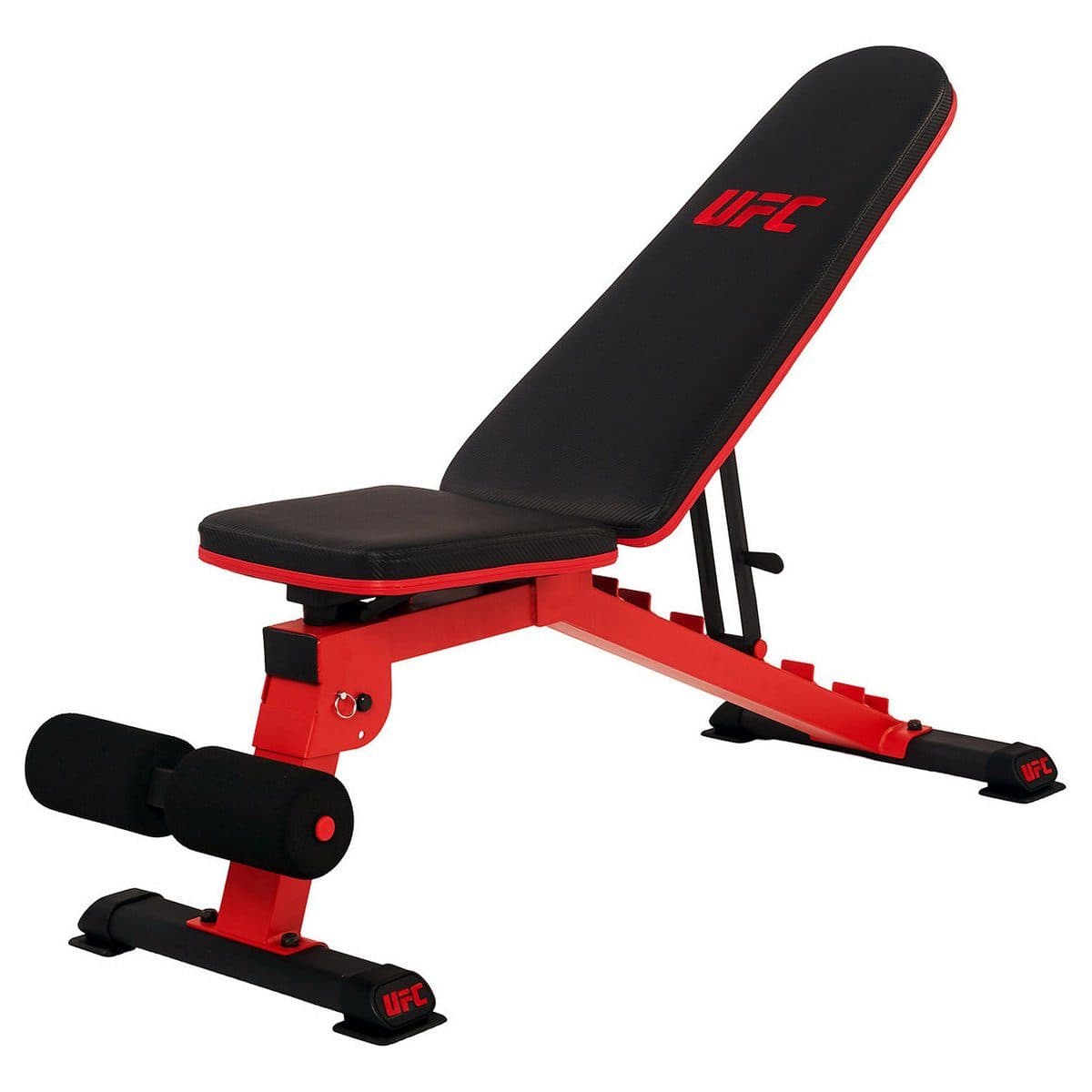
UFC Folding FID Bench
If you want one bench that does everything and does not wobble, the UFC Folding FID is the value pick. Seven backrest angles from decline to upright, a three-position seat, a 363kg load rating and 50mm padding, and it folds flat for storage. It is not commercial-gym heavy, but for home dumbbell pressing, rows and the occasional barbell set it is more bench than most people need, for around £110.
- Max
- -
- Steps
- -
- Price
- ~£100-120
 #24
Adidas
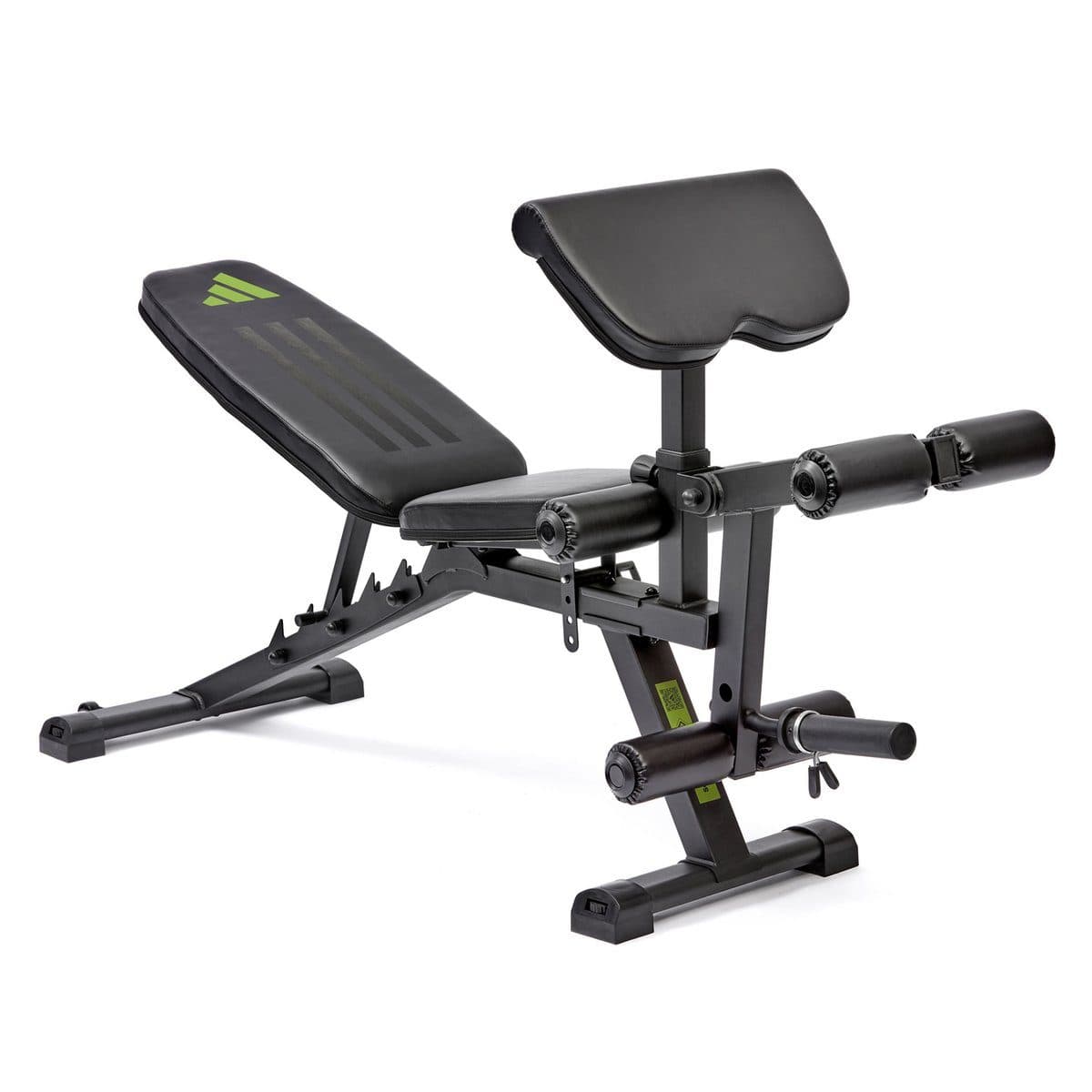
Adidas Performance Training Weight Bench with Leg Developer
The Adidas training bench rolls three stations into one: a flat-incline-decline bench, a preacher curl pad, and a leg developer for curls and extensions, plus uprights to take a barbell. For a beginner building a first home gym on a budget, that versatility is genuinely useful. The catch is the one every all-in-one makes: each station is decent rather than excellent, and it is not built for heavy pressing like a dedicated bench.
- Max
- -
- Steps
- -
- Price
- ~£130-150
 #25
Pro Fitness
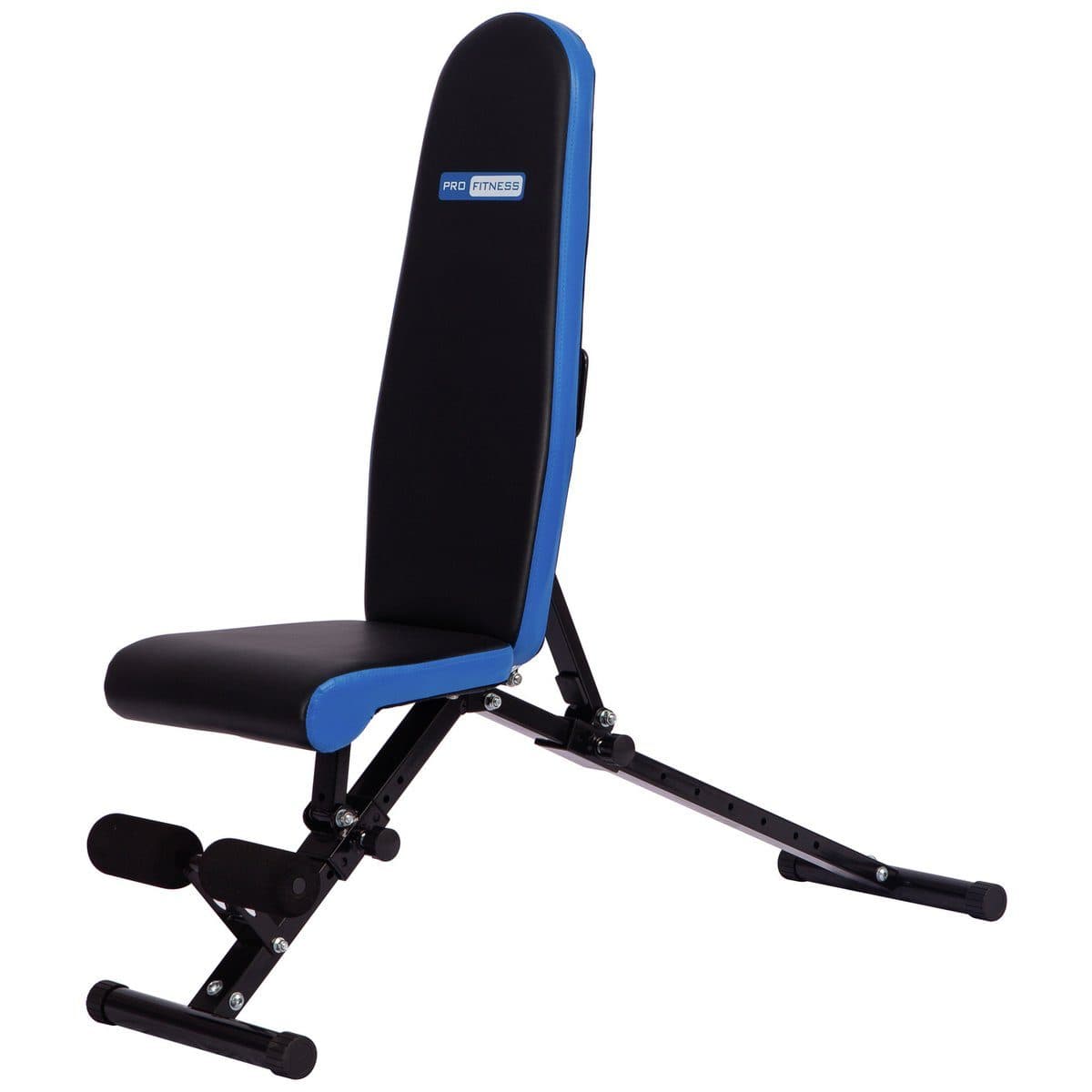
Pro Fitness Adjustable Foldable Weight Bench
The Pro Fitness adjustable bench is the budget way into bench work: flat, incline and decline positions, padded seat and back, fixed leg rollers, and it folds away, from a high-street name for around £89. It is light-duty, with a 120kg user limit and a frame built for dumbbells rather than heavy barbell, but for a beginner or a small space it does the core job well for the money.
- Max
- -
- Steps
- -
- Price
- ~£80-89